Last updated: September 2026. Prices and availability were checked on the day of writing.
A hand carved mask on a plain wall changes the whole room. It has weight, a face and a story, and unlike a print it has been shaped by one person's hands and tools from a single piece of wood.
This guide covers African wood carvings and sculpture: the woods and forms you will meet, how to tell a genuine hand carving, why you should be careful with anything sold as "antique", how to hang and display carvings at home, how to care for them, and pieces for sale right now from carvers in Ghana and Nigeria.
The woods and forms you will meet
Sese wood is the carving wood you will see most from Ghana. It is a light hardwood that carvers also use for drums. Left alone it is pale; most carvers stain it dark brown, but some leave it natural so the grain and the tool marks show.
Mahogany is denser and heavier, with a warm reddish grain. It suits abstract and sculptural work where the grain itself becomes part of the design.
Wall masks are the form most people picture first: long, carved faces made to hang, often with added detail such as punched metal panels, carved hair or cut through eyes.
Figures are carved to stand. The best known in Ghana is the Akuaba, the Akan figure with a large flat disc head, associated with motherhood and children.
Contemporary sculpture takes the same skills in a new direction: abstract forms carved from a single block, made to be seen from every side.
Beaded carvings combine both crafts. A carved wooden base is covered in tiny glass seed beads, sometimes edged with cowrie shells.
Contemporary carvings, and a word on "antiques"
Everything in this guide is contemporary: made recently by a named carver, to be sold and displayed. That is the honest and legal way to buy African carving today.
Be wary of anything online described as an old, antique, tribal or "used in ceremony" mask. Genuine antique African objects need documented provenance, many cannot legally leave their country of origin, and some materials, such as ivory, cannot be traded at all. A contemporary piece from a named maker is not a lesser thing. It is a living tradition, and your money goes to the person who carved it.
How to tell a genuine hand carving
- Look for tool marks. Hand carving leaves small facets and gouge marks, especially in recesses and around the eyes. A perfectly smooth, identical surface usually means a mould or a machine.
- Check the grain. In a carving from one piece, the wood grain runs continuously through the form. Joins and filler suggest assembly.
- Expect small asymmetries. Two sides of a hand carved face are never quite identical.
- Ask about the wood and the maker. A genuine seller can tell you the wood, how it was finished and who carved it.
African carvings and sculpture for sale now
The full, always current selection lives on the wood carvings page, which is the best place to start: carvings are often one of a kind, so individual pieces sell and new ones arrive. The pieces below were live and checked on the day this guide was written, as examples of what to expect at each price.
Carved wall masks from Ghana
These are carved in sese wood by the Golden Heritage Africa Gallery in Ghana. The maker names each mask for an idea.
The Observer, 250 GBP. Grey, unstained sese wood, 38 cm tall, with long hooded eyes cut in fine vertical lines and ears carved at the sides. Named for the wisdom of watching before acting.
The Enlightened One, 300 GBP. Left pale rather than stained, 45 cm tall, with punched dot work on the brows and cheeks and eyes cut right through the wood.
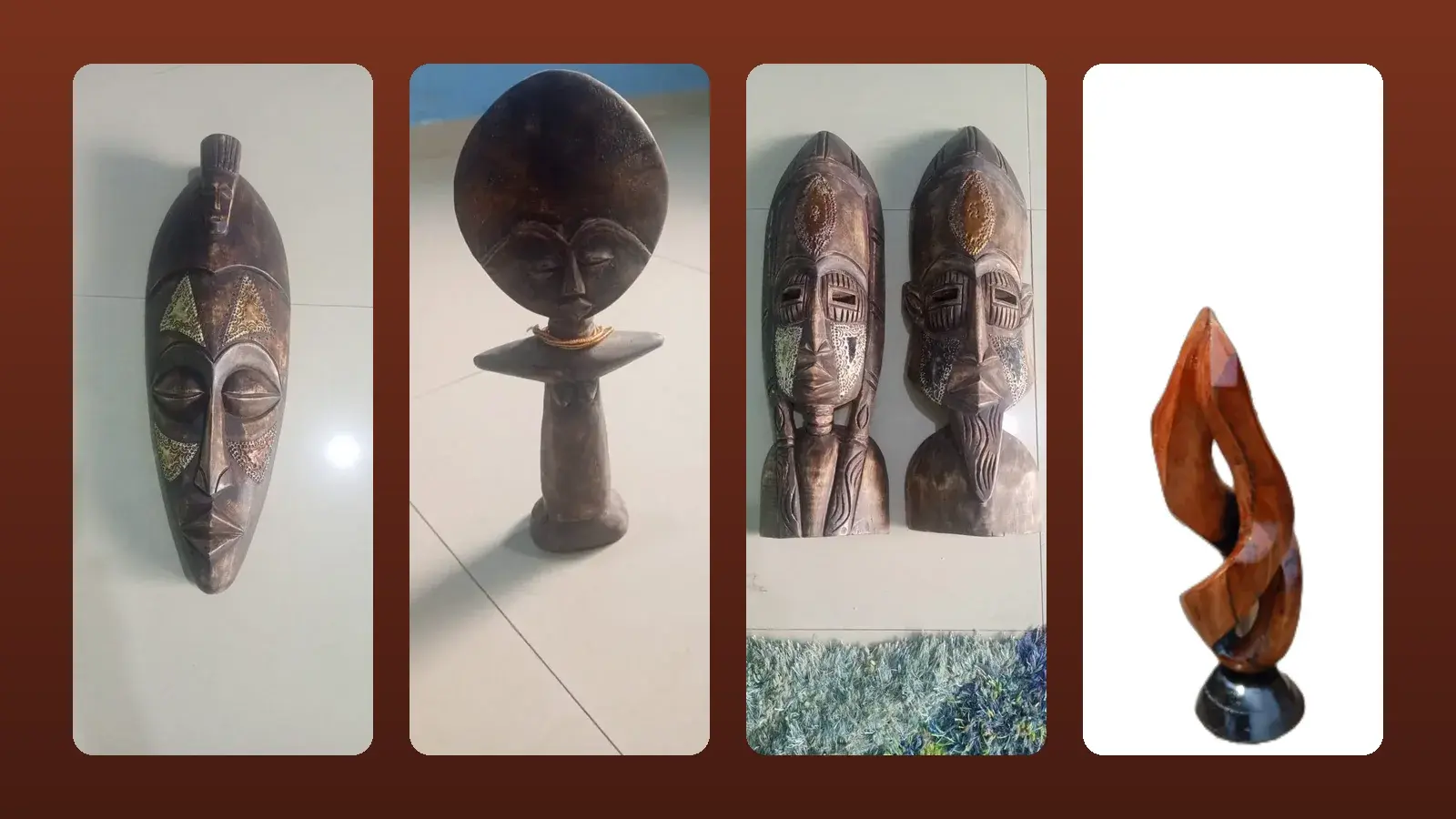
Intuition, 350 GBP. Dark stained, 45 cm tall, with heavy closed eyes, a small carved head at the crown and patterned gold and copper tone metal panels set into the brow and cheeks.
Prosperity, 400 GBP. A deep polished brown, 45 cm tall, with carved scrolls over the brow and a small head with a tall ridged crest rising from the crown.
Male and Female Wall Mask Pair, 800 GBP. Two masks sold together, each about 46 cm tall: the female with carved plaits and a ringed neck, the male with ears and a long carved beard, both with punched copper and silver tone panels.
Figures and sculpture
Akuaba Figure, 200 GBP. A 25 cm Akuaba in dark stained sese wood, with the classic flat disc head, a ringed body and a beaded necklace, standing on its own carved base. From Ghana.
Transformation, 120 GBP. An abstract sculpture carved from one piece of mahogany, about 33 cm tall on a turned black base, a twisting form with an opening cut right through the centre. One of a kind, from Nigeria.
Beaded carvings
Gye Nyame Beaded Wall Mask, 80 GBP. Carved sese wood covered in glass seed beads, with the Gye Nyame adinkra symbol across the brow and a rim of cowrie shells. About 32 cm long, ready to hang. From Ghana.
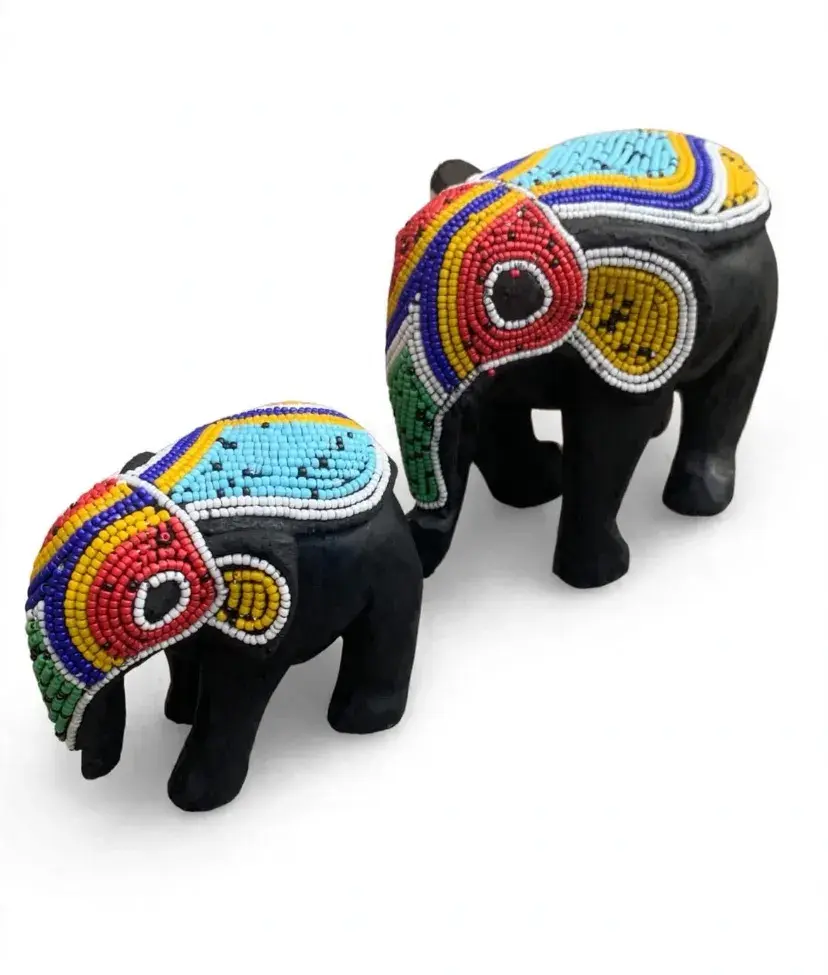
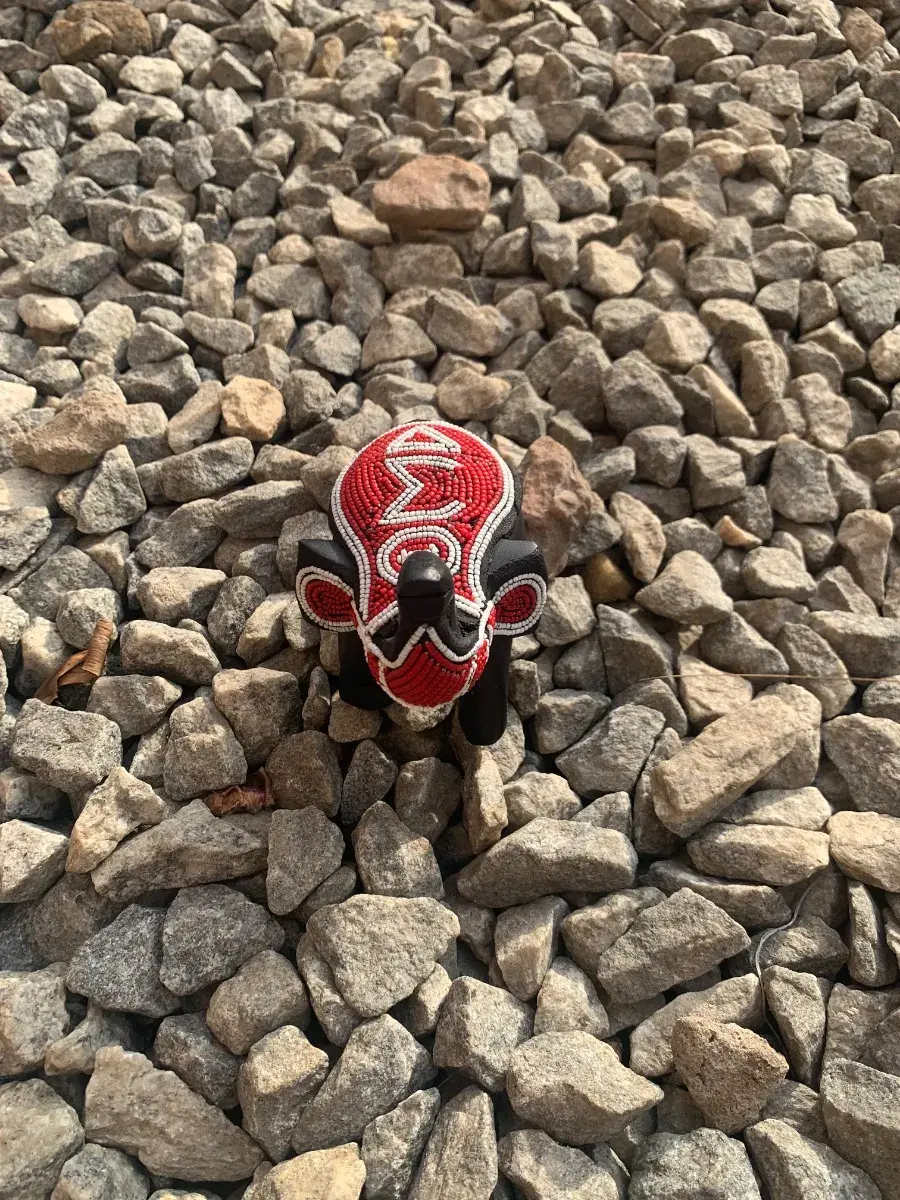
Beaded Elephants, Mother and Child, 92 GBP. A pair of small carved elephants with beaded blankets over the head and back, about 10 cm and 7 cm. A good gift for a new baby or a nursery.
Beaded Africa Map, Pan African Colours, 100 GBP. A carved map of Africa beaded in red, black and green with a full border of cowrie shells, about 28 by 21 cm.
If a piece above has sold, the wood carvings page always shows what is available now. You can also browse all handmade African crafts or Made in Ghana, where most of the carving on Sokofa comes from.
How to hang and display carvings
One mask, at eye level. A single mask is strongest alone on a plain wall, hung with its eyes roughly at eye height. Give it space; do not crowd it with frames.
Pairs and groups. A male and female pair reads best hung side by side at the same height. For a group of masks, odd numbers (three or five) at slightly different heights look more natural than a neat grid.
Figures on a shelf or plinth. Freestanding pieces like an Akuaba or an abstract sculpture need a little room around them, ideally on a shelf where they can be seen from the side as well as the front.
Light from the side. Carving is all about shadow. A lamp or window to one side brings out the tool marks and the depth of the face far better than overhead light.
Mix with other materials. Carvings sit well alongside woven baskets, textiles and paintings. See our guides to Ethiopian baskets and African paintings for pieces that pair well.
How to care for wood carvings
Keep them dry and stable. Wood moves with humidity and heat. Avoid hanging carvings above radiators, next to heaters, in steamy bathrooms or in strong direct sun, all of which can dry the wood and cause cracks.
Dust with a soft brush. A soft, dry paintbrush reaches into carved recesses without scratching. Avoid water and household sprays.
Handle beaded pieces gently. Lift beaded carvings by the wooden body, not by the beads or shells.
Expect a little settling. Wood from a warm climate can shrink slightly in a centrally heated UK home, especially in the first winter. A fine hairline along the grain is normal in hand carved hardwood and usually does not affect the piece.
Delivery to the UK
The delivery cost for your address is shown at checkout before you pay. Carvings are dense, so a large mask or a pair weighs more than it looks, and that is reflected in the delivery price. Each maker sets their own dispatch time, shown on the listing.
Buying from Sokofa
Sokofa is a UK marketplace for verified African artisans and makers, most of them in Nigeria, Ghana and Kenya. Every seller goes through our Verified Seller Programme, delivery is priced at checkout, and we deliver worldwide. If something arrives damaged, wrong or not as described, report it within 48 hours of delivery and it gets put right.
Frequently asked questions
What wood are African masks made from
In Ghana, carvers often use sese wood, a light hardwood also used for drums, which is usually stained dark brown but sometimes left pale. Mahogany and other dense hardwoods are also used, especially for sculpture.
Where can I buy African wood carvings online
The wood carvings section on Sokofa (sokofa.com/crafts/wood-carvings) lists hand carved masks, figures and sculpture from verified carvers in Ghana and Nigeria, with delivery to the UK and worldwide. Because many pieces are one of a kind, the selection changes as pieces sell and new carvings arrive.
Are these African masks antique
No. The masks and carvings on Sokofa are contemporary pieces made by named carvers to be sold and displayed. Be cautious of anything sold online as an antique or ceremonial mask: genuine antiques need documented provenance, and many cannot legally be exported.
How do I hang an African wall mask
Most carved wall masks have a hook or loop on the back. Hang a single mask with its eyes around eye level on a plain wall, and hang pairs side by side at the same height. Use a picture hook rated for the weight, as solid wood masks can be heavier than they look.
What is an Akuaba figure
An Akuaba is a carved figure from the Akan people of Ghana, recognisable by its large flat disc head. It is associated with motherhood, children and a family line continuing, and today it is also collected and displayed as sculpture.
How much do African wood carvings cost
On Sokofa, beaded carvings start at around 80 GBP, carved figures and sculpture from around 120 GBP, single carved wall masks around 250 to 400 GBP, and a carved pair around 800 GBP.
How do I stop a wood carving from cracking
Keep it away from radiators, heaters, steamy rooms and strong direct sun, and dust it rather than washing it. Wood from a warm climate may settle slightly in its first UK winter; a fine hairline along the grain is normal.