
The first one came as a gift.
Rosa had been given a small handwoven basket by her aunt, who had bought it at a market in Addis Ababa during a visit years earlier. It was made from natural dry grass, the colour of warm honey, with a fitted lid and a slightly irregular weave that made it feel unmistakably alive, as though the person who made it had left a trace of themselves in the pattern. Rosa put it on her bedside table in her Bristol flat, where it sat between a half-finished novel and a glass of water, and she noticed that every visitor mentioned it before they mentioned anything else in the room.
That is the thing about Ethiopian baskets. They do not sit quietly. They have a visual gravity that is difficult to explain until you see one in a room that did not have one before.
If you are wondering how to decorate your home with Ethiopian baskets, whether you have one already or are thinking about buying your first, this guide takes you through the practical and aesthetic logic of using them well. Not as curiosities, not as props, but as the genuinely useful, beautifully made objects they are.
What Makes Ethiopian Baskets Different
To understand how to use Ethiopian baskets in home decor, it helps to understand what they actually are. These are not factory-produced items shaped to look handmade. They are made entirely by hand in Ethiopia from natural dry grass, selected, dried, and woven tightly without machines. The process is slow. A single basket of medium size takes days. The result is a structure that is dense, durable, and warm in a way that few manufactured objects achieve.
The leather handles, where they exist, are cut by hand and stitched or tied directly into the grass. The lids, where included, are woven separately and fitted to sit snug without a gap. These details matter for home use because they determine how a basket behaves over years of everyday life: whether the handles hold weight, whether the lid keeps things tidy, whether the weave loosens or stays firm.
The natural golden-brown colour of the dried grass is also notable. It is warm without being orange, neutral without being bland, and it sits comfortably alongside both cool Scandi palettes and richer, warmer interiors. UK homes, with their tendency toward grey, white, and navy as base colours, tend to suit Ethiopian baskets extremely well. The warmth of the grass cuts through what can otherwise feel like a cold interior.
The Living Room: Storage That Does Not Look Like Storage
The most common use for a large Ethiopian basket in a British home is blanket storage, and it is an excellent one. A large lidded basket placed beside a sofa holds throws, spare cushions, and children's toys without the visual noise of a pile of fabric or the coldness of a plastic box.
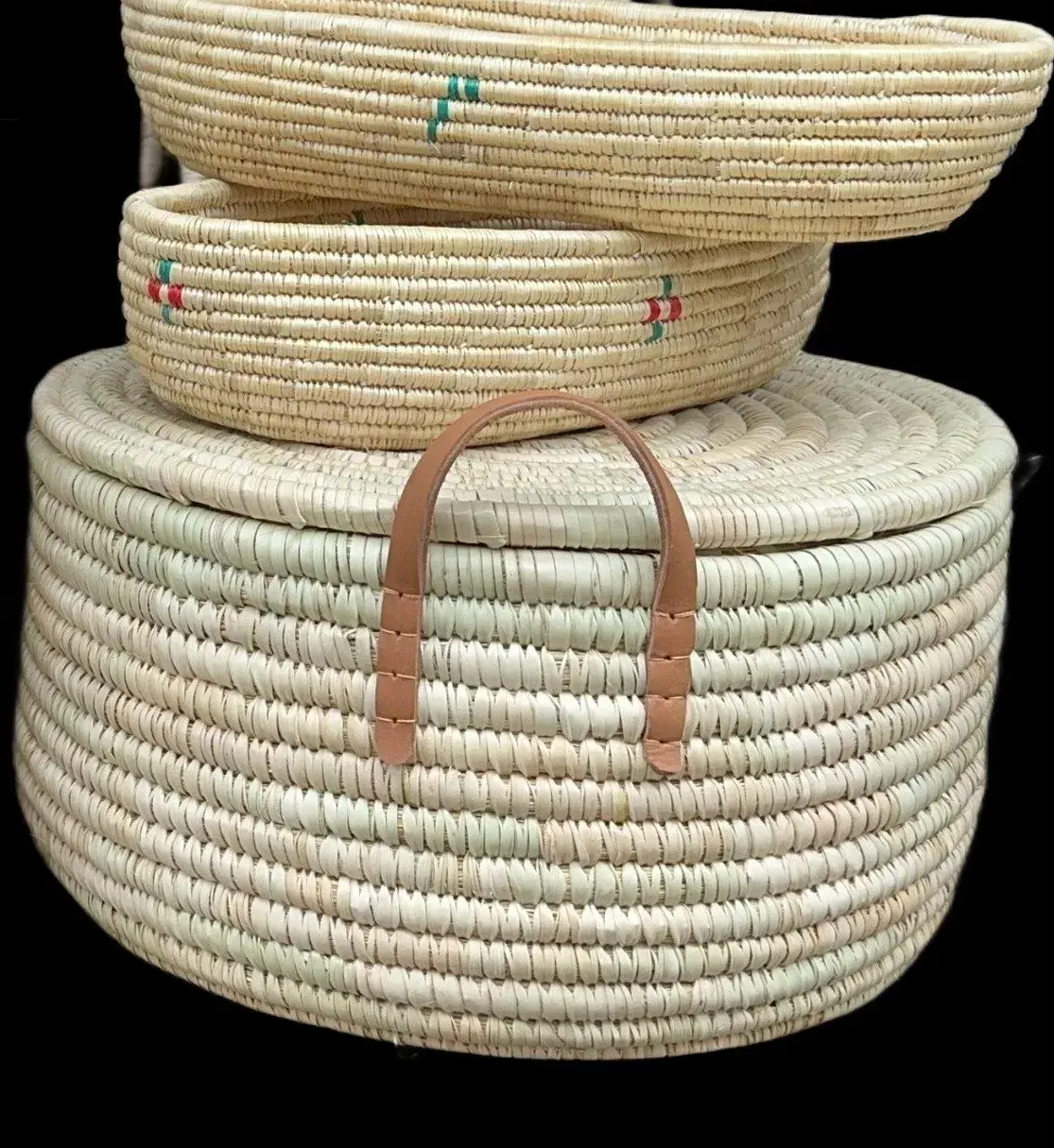
The Large Handwoven Ethiopian Basket with Lid from Noah's Weave is made for exactly this. At a substantial size, with a lid that sits snug and keeps contents dust-free, it functions as a piece of furniture as much as a storage solution. It is the kind of object that replaces three decisions: what to do with the blankets, where to put the spare cushions, and how to make the corner of the living room look as though someone thought about it.
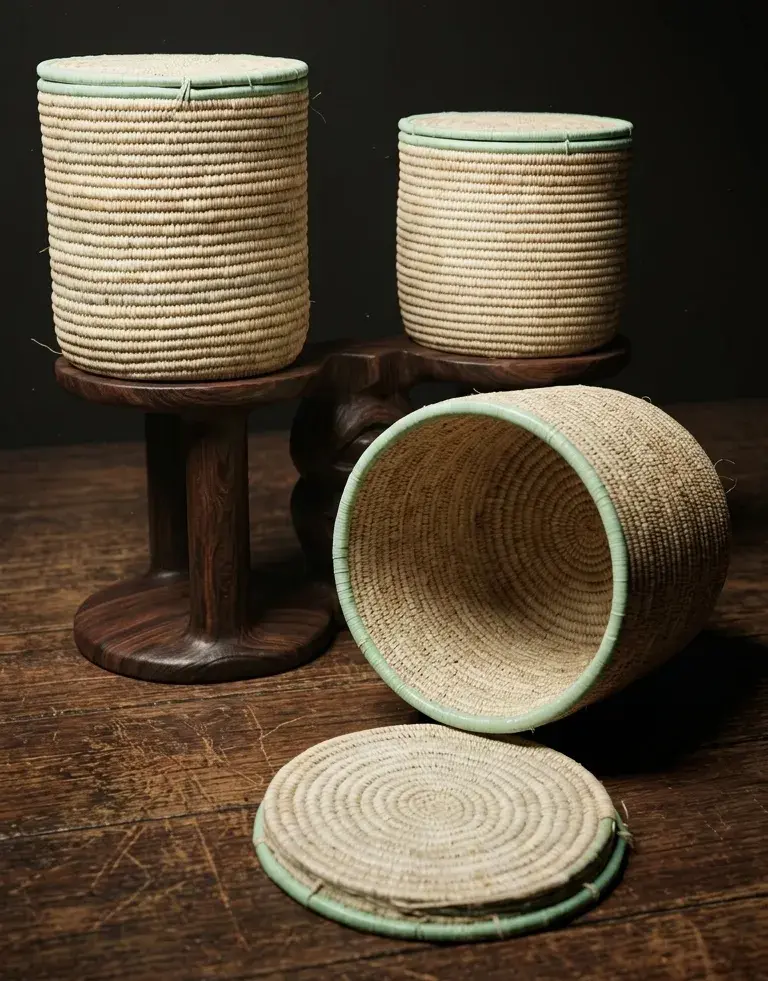
For living rooms with exposed shelving, smaller lidded baskets work as display objects in their own right. The Small Handwoven Ethiopian Basket with Lid sits comfortably on a shelf alongside books, plants, and ceramics, adding the kind of tactile, organic texture that mass-produced homeware almost always lacks.
If you have a fireplace that is not in use during warmer months, a cluster of baskets at different heights inside the grate can replace what would otherwise be a cold, dark space with something that feels considered and warm.
The Bedroom: Practical Objects That Feel Like Luxury
The bedroom is where Ethiopian baskets reveal their most versatile quality: they are useful without feeling utilitarian.
A small basket with a lid on a bedside table holds the things that accumulate there by the end of the day: jewellery, earplugs, lip balm, coins from a jacket pocket. The lidded design keeps them out of sight without requiring a drawer or a dedicated tray. The natural grass surface catches the light from a bedside lamp in a way that feels genuinely warm.
A medium or large basket at the foot of a bed solves one of the more persistent interior design problems in British bedrooms: what to do with extra blankets in summer, or extra pillows in winter. The Large Handwoven Ethiopian Basket with Lid and Leather Handle is designed with this in mind. The leather handle makes it easy to move when you need to reach inside, and the lid keeps everything contained and clean.
In a larger bedroom, two baskets of the same style at equal height on either side of the bed create symmetry without the formality of matching lamps or bedside tables. Asymmetry, if you prefer it, works just as well: one large basket for storage, one small lidded basket on the table, and the natural variation between them reads as curated rather than accidental.
The Kitchen: Baskets as They Were Always Meant to Be Used
Ethiopian baskets have always been functional objects. In Ethiopia, they are used to carry bread, serve food, store grain, and organise the materials of daily life. In a British kitchen, that original purpose translates directly.
A basket with leather handles on a kitchen worktop holds fruit in a way that is both practical and genuinely good to look at. The Handwoven Ethiopian Small Basket with Leather Handles for Serving is sized for exactly this: bread to the table, fruit on the worktop, snacks passed around at a dinner party. The leather handles make it comfortable to carry, and the tight weave means nothing small enough to fall through actually does.
A medium basket with handles, like the Medium Handwoven Ethiopian Basket with Brown Leather Handles, works for the trips that a shopping bag usually handles: the farmers' market on a Saturday morning, the trip from kitchen to garden when you are eating outside. The dark brown leather against the warm grass is a colour combination that improves almost any kitchen aesthetic, whatever the existing palette.
The Hallway: The Welcome That Sets the Tone
British hallways are often overlooked as design spaces, which is a shame, because they set the expectation for everything that follows. A well-placed basket in a hallway does quiet, effective work.
A large basket beside a coat rack holds umbrellas, gym bags, or the dog's leads without the visual chaos of things piled against a wall. A small basket on a console table holds keys, post, and the small miscellany that accumulates at the point of entry into any home. Both functions are solved by objects that look deliberate rather than improvised.
The Handwoven Ethiopian Basket with Tied Leather Handles has a distinctive design that sets it apart from most basket products: the leather handles are tied below the rim rather than at the top, which creates a deeper, wider opening that is excellent for storing soft items like scarves, hats, and bags. In a hallway context, this design makes it significantly more practical than a standard basket.
Combining Ethiopian Baskets with Other African Artisan Homeware
Ethiopian baskets work particularly well alongside other handmade objects, because they share a material honesty that mass-produced decor often lacks. Natural wood, hand-thrown ceramics, woven textiles, and original artwork all coexist easily with the warm grass tones of Ethiopian weaving.
If you are building a broader African decor scheme, the baskets provide texture and function while wall art and sculptures provide the visual focal points. A combination of a large storage basket, a medium serving basket for the kitchen, and a small keepsake basket for the bedroom gives you three distinct uses from a single aesthetic, without anything feeling repetitive.
The Baskets and Weaving section of Sokofa has the full range of Noah's Weave Ethiopian baskets. Browse alongside the African Home Decor collection to see how the baskets sit within a broader approach to African artisan homeware in a UK interior.
How to Care for Ethiopian Baskets
Ethiopian handwoven baskets are durable, but they reward a small amount of attention. Keep them dry as a general rule. The natural grass is strong when its moisture content is stable, but prolonged damp conditions can weaken the weave over time.
If a basket loses its shape in transit, the remedy is simple: lightly mist the grass with clean water and gently reshape it by hand. Natural grass becomes pliable when damp and holds the new shape once it dries. This is one of the properties that makes it such a good weaving material in the first place.
The leather handles darken slightly with handling over time, which is not a defect. It is the same process that makes leather bags and belts better with age. The handles are cut and attached by hand, which means they are strong, but they should not be used to carry weights beyond what the maker intended.
Direct sunlight over long periods can bleach the grass slightly. If a basket is near a south-facing window, rotating it occasionally will keep the colour even.
Where to Buy Ethiopian Baskets in the UK
The difficulty with buying handwoven Ethiopian baskets in the UK has always been provenance. High-street homeware stores sell what they call African baskets, but the connection to African makers is rarely direct, and the price compression that high-street retail requires generally means the maker's share of the final price is uncomfortably small.
Sokofa takes a different approach. Every vendor on the platform is verified, which in the case of Ethiopian baskets means the products come directly from Noah's Weave in Addis Ababa, made by hand and shipped with no factory in between. The product descriptions tell you exactly what you are buying: the size, the materials, how the handles are attached, and what the basket is best used for.
The Handwoven Ethiopian Basket, Natural Dry Grass, Fair Trade Home Decor is the clearest statement of that: a basket that is what it says it is, made how it says it was made, by people who are named on the page where you buy it.
The Basket Rosa Still Has
The basket Rosa was given by her aunt is still on her bedside table. It has a slightly worn edge on one side where she lifts the lid each morning to reach for her rings. The grass around the edge has darkened a little with handling. The shape is exactly as it was when it arrived.
She has since bought three more: a large one for the living room, a medium one for the kitchen, and a small serving basket that gets used at the table most weeks. None of them were expensive relative to what they do in the rooms they are in. All of them are still the first thing visitors mention.
Browse the full collection of handmade African crafts at Sokofa, including the complete range of Ethiopian baskets, and find the piece that will do that same quiet, effective work in your home.