Adaeze nearly cried over a sink. Not because anything terrible had happened, but because the bowl of water in front of her had turned a faint, accusing shade of pink, and the ankara dress she had bought for her cousin's naming ceremony in Peckham was the reason. She had done everything she thought was sensible. Cold water. A gentle squeeze. No scrubbing. And still, after one wash, the reds had bled just enough that the white background looked tired rather than crisp.
She is not alone. Every week, somewhere in a flat in Manchester or a terraced house in Bristol, someone unwraps a parcel of handmade African textiles, jewellery, leather goods or woven baskets, falls slightly in love with it, and then has absolutely no idea how to look after it once the excitement wears off. Care instructions rarely come printed on the inside seam of a piece that was dyed by hand in a workshop in Abeokuta or woven from dry grass in Addis Ababa. The knowledge that exists is the kind passed down between mothers, market traders and artisans, not the kind that gets printed on a polyester care label.
This guide pulls that knowledge together in one place, specifically for people in the UK who have bought, or are about to buy, something handmade and African and want it to last. We will get into how to wash ankara fabric without losing its colour, how to care for wax print clothing more broadly, how to clean wood carvings without damaging the finish, how to look after handmade leather goods through a British winter, and how to keep handwoven baskets looking the way they did on the day they arrived. None of it is complicated. Most of it just runs against the instinct to treat a beautiful object like a delicate one, when actually these pieces were built by hand to survive real life.
How to wash ankara fabric without losing colour
Ankara, also called African wax print, is cotton fabric printed using a resin-resist process that pushes wax through both sides of the cloth before dyeing. That process is precisely why ankara colours are so rich, and why they can also run if you treat the fabric like an ordinary cotton t-shirt. The dye sits close to the surface of the fibre in a way that is gorgeous to look at and genuinely vulnerable to heat, agitation and harsh detergent, particularly in the first few washes.
The single biggest mistake people make is washing a new ankara piece with anything else in the machine. Always wash ankara alone for the first three to four washes, by hand if you can manage it, in cold water with a small amount of mild detergent. Avoid bleach and avoid fabric softener, which can strip the wax finish that gives ankara its characteristic stiffness and sheen. Turn the garment inside out before washing, since most of the dye loss happens from friction against the printed surface rather than from the water itself.
If you do use a machine, choose the coldest, gentlest cycle available and skip the spin if you can. Dry ankara away from direct sunlight, which fades the print over time, and away from a radiator, which can set creases permanently into the wax coating. A few drops of white vinegar in the first rinse genuinely helps set the dye, an old trick that traders across West Africa still swear by. If you have just brought home something like the Royal Glow Ankara Complete Set, that first wash matters more than any wash that follows, so it is worth the extra ten minutes of care.
Caring for african wax print clothing beyond the first wash
Once a wax print piece has settled in, the routine gets easier, but a few habits will keep it looking new for years rather than months. Iron ankara on the reverse side, on a medium heat, ideally with a damp cloth between the fabric and the iron. Ironing directly on the printed face, especially on a hot setting, can melt residual wax and leave a dull, slightly plasticky sheen where there should be a soft glow.
Store ankara folded rather than on a hanger if it is heavier weight, since hanging can stretch the weave over time, particularly in pieces with a lot of embroidery or beading. If you own something with matching accessories, such as the headwrap, fabric earrings and bangle that come with a set like the Elegant African Fashion Set, store the textile pieces separately from metal accessories to avoid any colour transfer or scratching. And if a stain does happen, treat it immediately with cold water rather than waiting and reaching for a stronger product later. Wax print holds onto fresh stains far better than set ones.
Looking after handmade leather goods through a British winter
Leather behaves completely differently from cotton, and British weather is not always kind to it. A piece like the MMA Handcrafted Leather and Aso Oke Bag, which pairs full grain leather with handwoven Aso Oke fabric, needs two separate kinds of attention because it is genuinely two materials joined into one object.
For the leather itself, the enemy is moisture without aftercare. Rain is not the problem. Rain followed by letting the bag dry flat on a radiator is the problem, since direct heat dries out the natural oils in the leather and leaves it stiff and prone to cracking. If a leather bag or a pair of loafers, such as the KUNLE Loafers or the DUNNI Driving Loafers, gets caught in the rain, wipe off the surface water with a soft cloth and let them dry at room temperature, away from direct heat, stuffed loosely with paper to hold their shape.
Condition leather every few months with a small amount of leather balm or even a neutral shoe cream, worked in with a soft cloth in small circular motions. This is what builds the patina that makes full grain leather look better with age rather than worse, and it is the difference between a bag that looks tired after a year and one that looks like it has a history after five. For the Aso Oke or any woven textile panel on a leather piece, treat that section the way you would treat any handwoven fabric: spot clean only, no soaking, and keep it away from direct sun when storing.
How to clean african wood carvings without damaging the finish
Carved wood pieces, whether a small decorative object or a larger sculptural carving, are typically finished with natural oils or wax rather than synthetic lacquer, which means the cleaning rules are closer to caring for a wooden kitchen worktop than a piece of furniture from a high street shop. Dust regularly with a soft, dry cloth, working with the grain rather than across it. This alone prevents most of the dulling that makes carvings look neglected over time.
Avoid water wherever possible. If a carving genuinely needs a deeper clean, use a barely damp cloth and dry it immediately afterwards, never leaving moisture to sit in the grain. British homes swing between dry, heated winters and damper summers, and wood responds to both by expanding and contracting slightly, which is normal and not a sign of damage. What wood does not respond well to is direct sunlight or sitting right next to a radiator, both of which can cause cracking over time. Re-oil a carving every six to twelve months with a food safe wood oil or beeswax polish, applied sparingly with a soft cloth, to keep the surface fed and the colour rich.
Caring for handwoven baskets so they last for decades
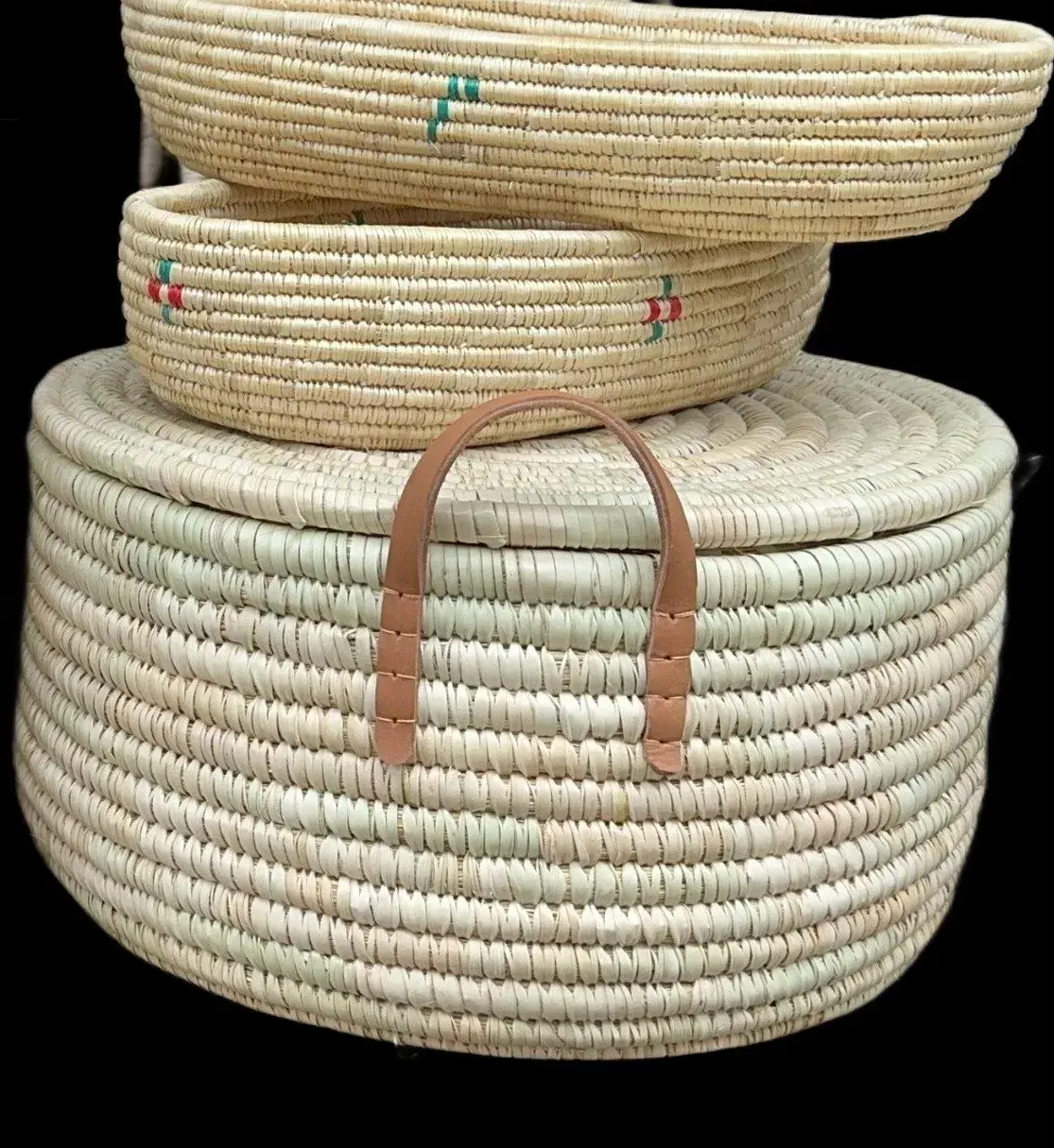
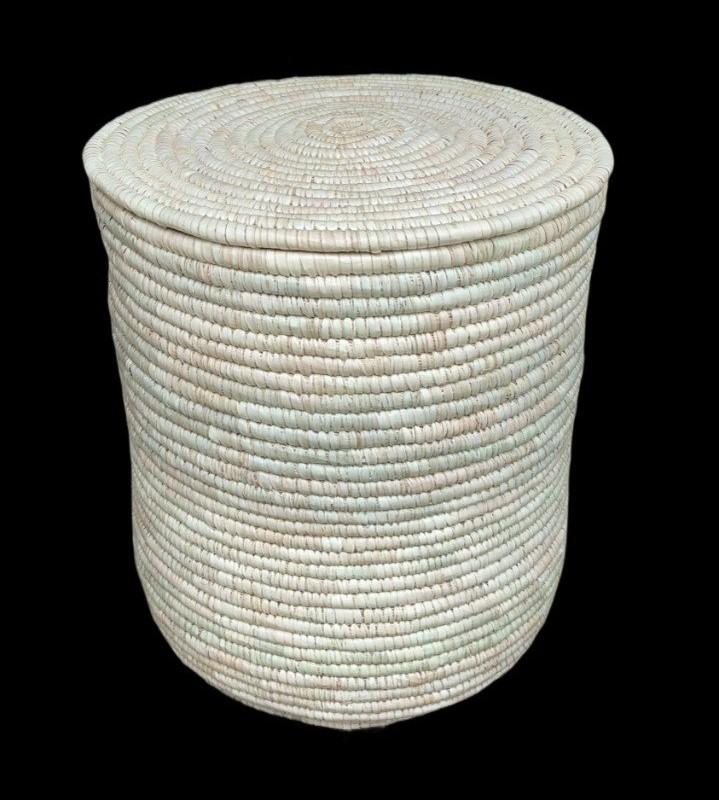
Handwoven baskets, like the range of Ethiopian baskets woven from natural dry grass with leather handles, are some of the most forgiving handmade pieces to look after, which is part of why they have survived as a craft for so long. The grass fibres are naturally durable, but they do best with a routine that respects how they were made.
Keep baskets dry. Unlike textiles, woven grass does not wash well, and getting a basket properly wet risks both mould and a change in shape as the fibres swell and then shrink unevenly as they dry. For everyday cleaning, a soft brush or the brush attachment on a vacuum cleaner, used gently, lifts dust out of the weave without stressing the fibres. If a basket has leather handles, such as the Medium Handwoven Ethiopian Basket with Brown Leather Handles, treat those handles the same way you would treat a leather bag strap: an occasional wipe with a barely damp cloth and a light conditioning with leather balm a couple of times a year.
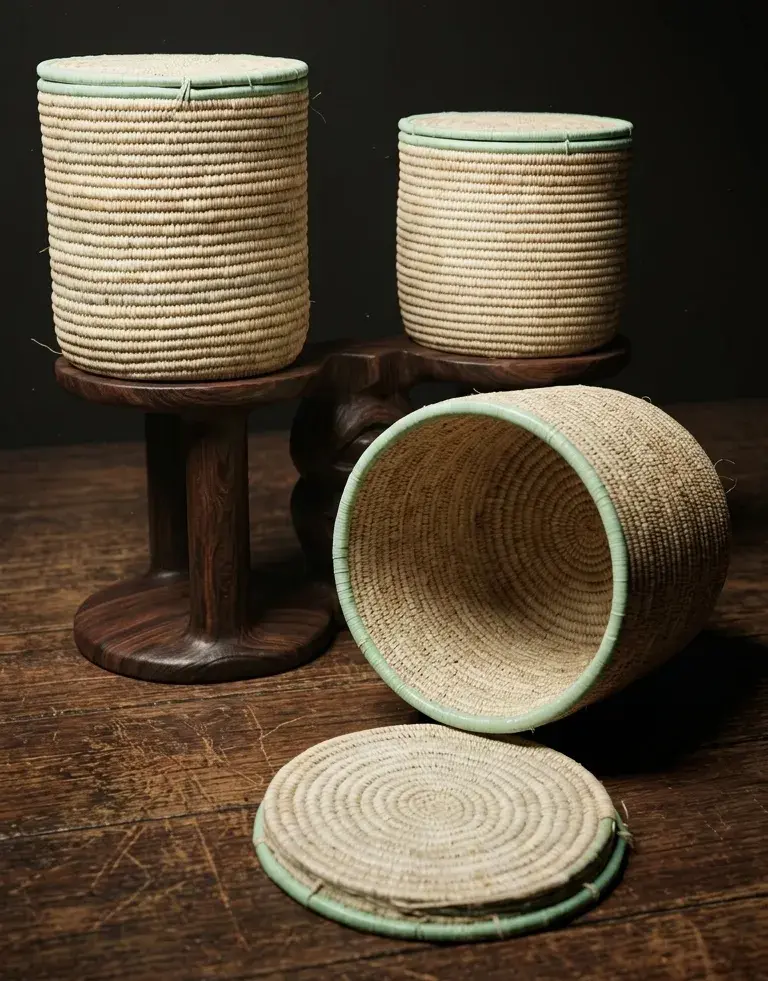
Position matters more than most people expect. Keep woven baskets away from direct sunlight, which dries and eventually bleaches the natural grass colour, and away from radiators or other direct heat sources, which can make the fibres brittle. If you are using a basket with a lid, like the Small Handwoven Ethiopian Basket with Lid for Jewelry and Keepsakes, let it breathe occasionally rather than keeping it permanently sealed, particularly in a humid bathroom or kitchen.
A few habits that protect everything you own
Across textiles, leather, wood and weaving, a handful of principles repeat themselves, and they are worth holding onto as a general rule for anything handmade you bring into your home. Heat is rarely your friend, whether that is a hot wash, a radiator, direct sun through a window, or an iron set too high. Moisture wants to be brief and followed by proper drying, not avoided altogether and not left to linger. And dust, wiped away gently and often, prevents almost every problem that would otherwise need a more drastic fix later.
Each ankara wrapper was printed and dyed by hand, each leather bag was cut and stitched by a named maker, each basket was woven strand by strand from grass gathered and dried before a single loop was tied.
It also helps to remember what you are actually looking after. These are not mass produced objects with a thousand identical siblings on a factory line. Caring for them properly is a small, ongoing way of respecting the work that went into making them, and it is also simply the most effective way to make sure they last.
If you are about to add a new handmade piece to your home and want something that will reward a little care with years of use, browse the full range of African crafts and home pieces on Sokofa, where every item is made and sold directly by verified African artisans, or explore the fashion accessories collection for leather goods and textiles built to live alongside you for the long term.