
Most of us have a corner like it. A tall lamp from a well-known high street chain sits there doing its job, technically: inoffensive, balanced and completely forgettable, in a room that is comfortable and clean but says nothing about the person who lives there.
Now picture that corner with an original acrylic painting on canvas instead, something like Nature's Embrace by Alogiartz from Lagos. It is warm, human and full of texture, it comes with a story, it measures 51 by 53 centimetres, and nothing like it exists anywhere else on earth.
That is the difference that handmade African home decor makes, and it is a difference that no high street collection, however well styled and attractively priced, can replicate.
What the High Street Gets Wrong
The high street has become extraordinarily good at a particular aesthetic. Walk into any large homeware store in Britain today and you will find shelves of "globally inspired" items: neutral-toned baskets that gesture vaguely towards craft, printed cushions that borrow patterns from West African textiles without credit, carved wooden objects whose origin is impossible to trace. They are sold in curated bundles under carefully chosen names. They look warm on Instagram.
But they are, almost without exception, produced at industrial scale. The basket was not woven by a person in Ghana who learned the technique from their grandmother. The print on the cushion did not come from a specific weave tradition with a name and a history. The carved figure was not made by a sculptor working in Abuja or Oyo who chose that grain of wood and that proportion deliberately.
This is not a moral lecture. Most people buying high street homeware are not trying to deceive themselves or anyone else. But it does mean that the object they take home is, at its core, a simulation of craft. It has the aesthetic of something made by hand without the substance of it.
What Handmade African Decor Actually Is
Handmade African artisan homeware is not a style category. It is a provenance. When you buy a piece from an independent African artisan, you are buying an object that a specific person made, in a specific place, using skills they have developed over years or, in some cases, decades.
Take the difference between a mass-produced "African print" canvas run off a machine in a factory, and an original painting like Embrace Beauty Series VI by Loje Art, a semi-abstract work celebrating self-love made with rich acrylic colour and bold form by an artist working in Lagos. The image might not look radically different in a small thumbnail. In a room, on a wall, the difference is total. One is a copy of a feeling. The other contains a feeling.
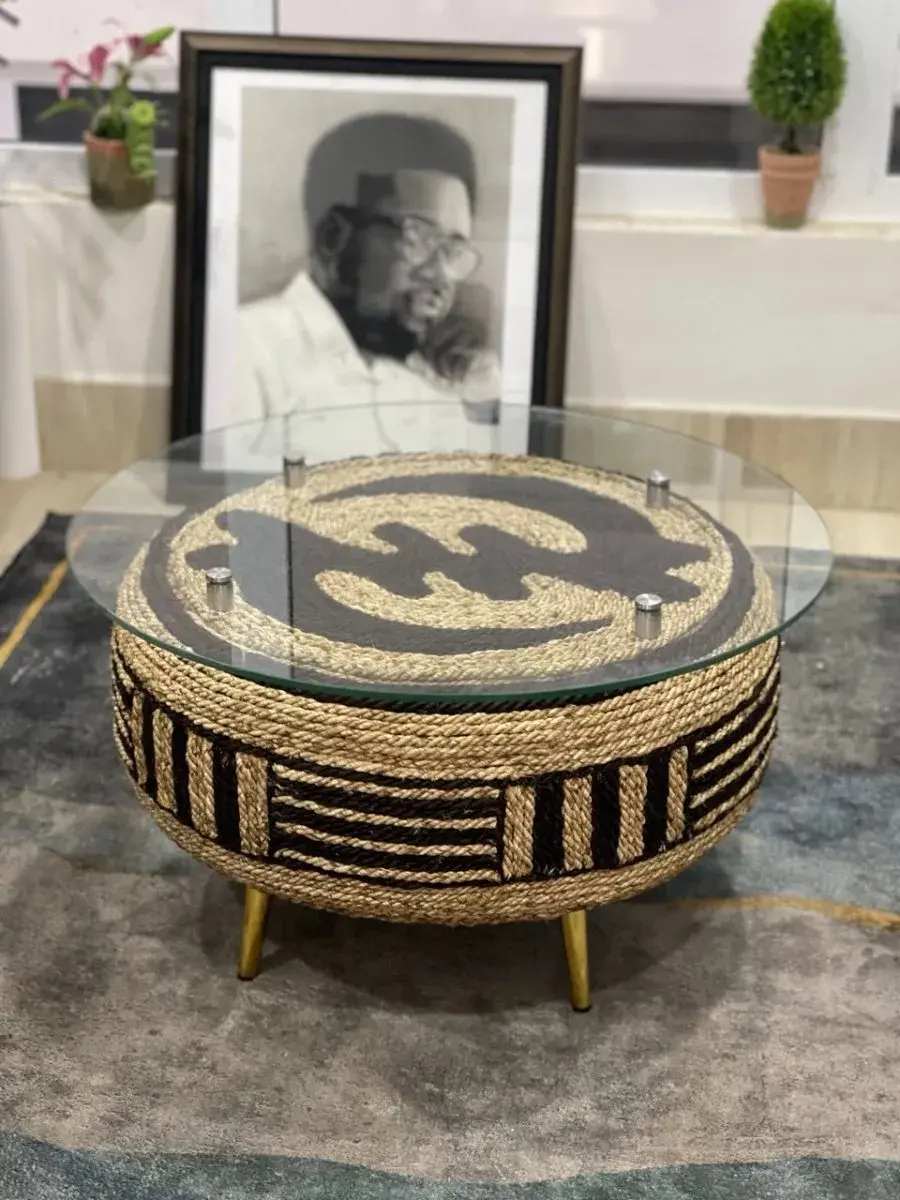
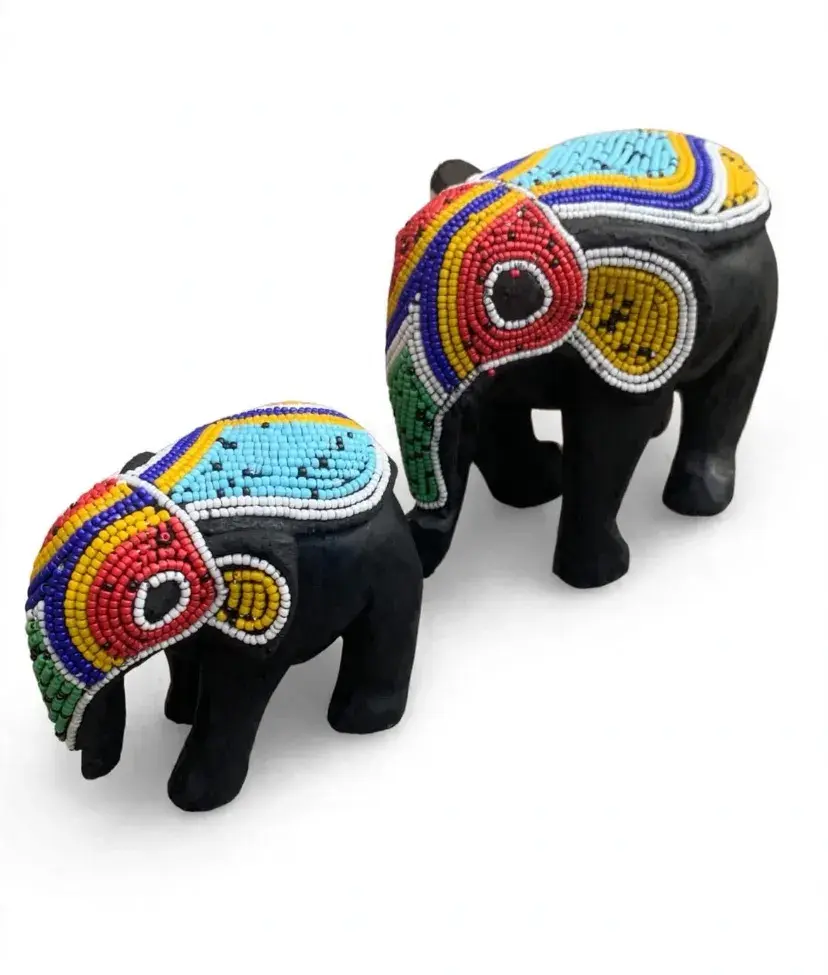
African artisan homeware is also, in most cases, deeply functional. Handwoven baskets are not just wall decorations; they can hold fruit, store blankets, or sit beside a sofa as a side table. Carved wooden pieces double as sculptural accents and functional objects. The materials are natural: elephant grass, raffia, mango wood, terracotta clay. They age well, they absorb imperfections, and they fit into interiors without demanding attention.
The Ethical Dimension of Buying Handmade
Buying from the high street versus buying from an independent African artisan is also a question of where your money goes.
When you buy an "African-inspired" piece from a large British retailer, the money goes primarily to the retailer, to their buying team, to the factory that produced the object, and eventually, via several layers of margin, to a manufacturer who was given a brief and paid to execute it. The person whose cultural heritage provided the original inspiration for the design is not in this chain.
When you buy handmade African home decor from Sokofa, most of your payment goes to the artisan, with no chain of middlemen between you and the person who made the piece. Every listing is reviewed before it goes live. Their storefront tells you who they are and where they work.
This is what ethical home decor in the UK looks like when it is done properly. It is not a branding claim. It is a structural difference in how the transaction works.
What Makes African Handmade Decor Different From Other Craft
People often ask what distinguishes African handmade decor from other artisan goods, and the honest answer is quite specific.
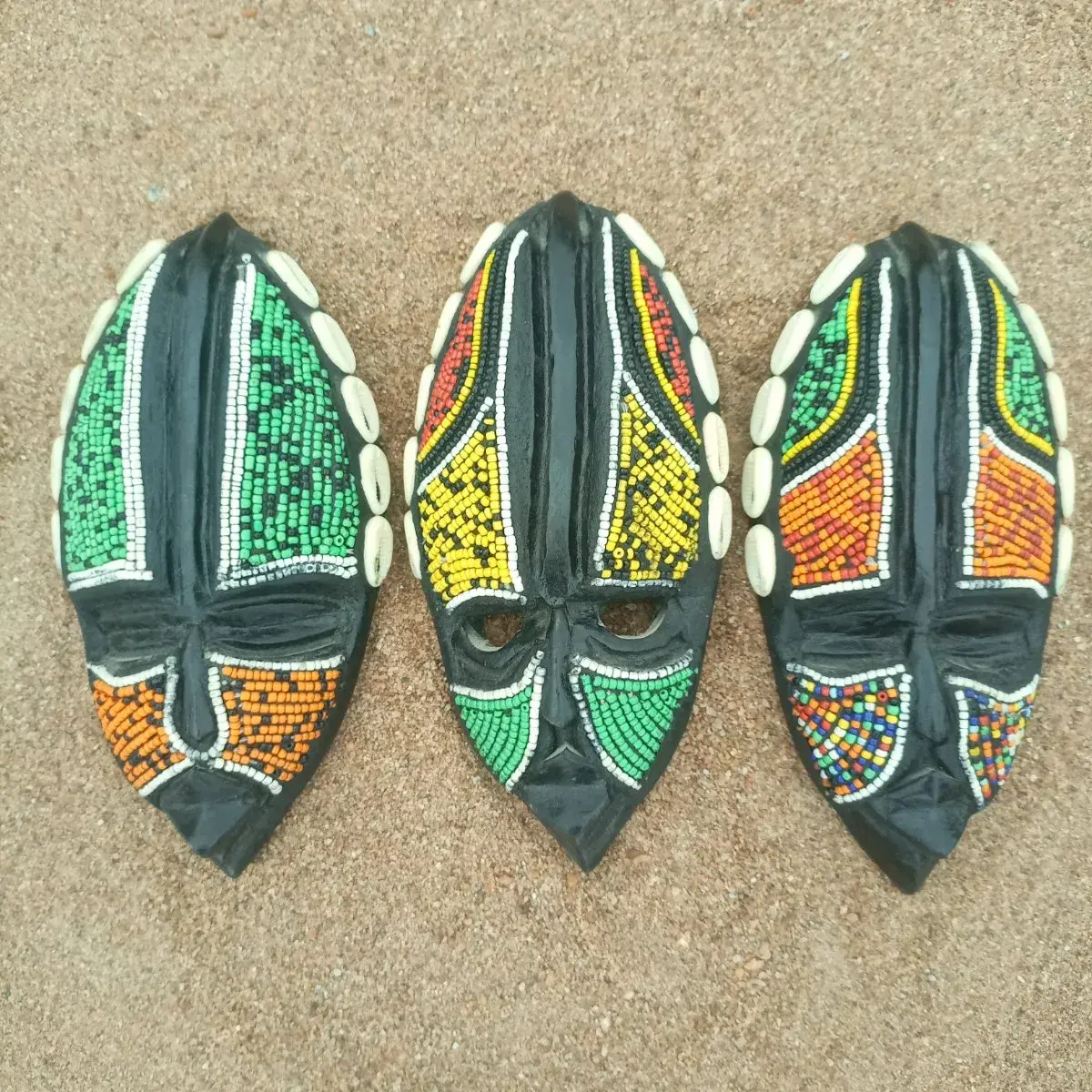
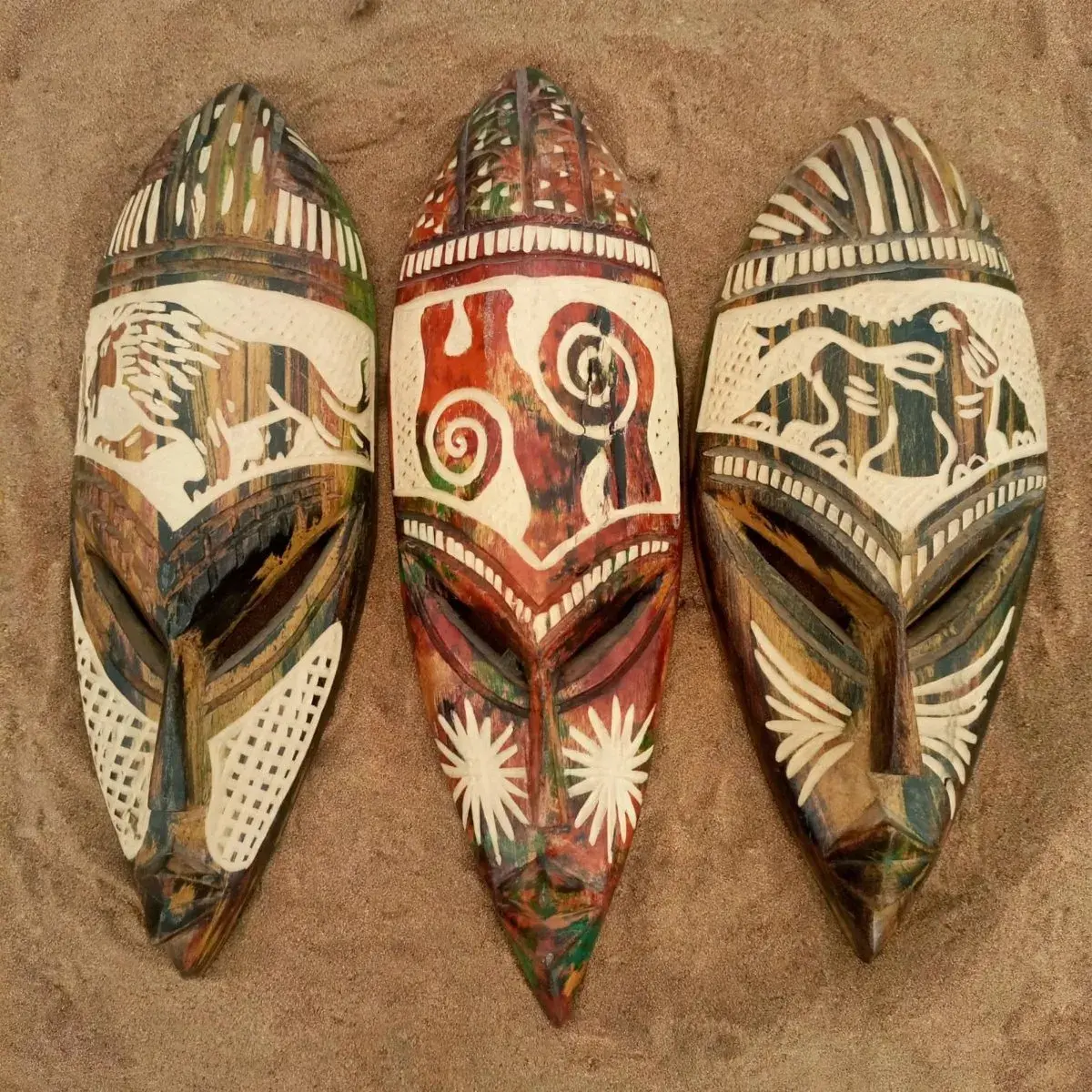
First, there is scale. African craft traditions operate at enormous diversity. From the geometric mudcloth of Mali to the vibrant kente weaving of Ghana to the carved bronze work of Benin, the continent encompasses traditions that vary as much as the languages spoken across its 54 countries. "African home decor" is not a single aesthetic. It is a continent's worth of aesthetics, each with its own visual language, material preferences, and symbolic vocabulary.
Second, there is intention. Much African decorative art carries meaning that is visible in the making. A pattern is not just a pattern. A colour choice is not arbitrary. A motif repeated across a woven surface tells you something about the community in which the weaver learned, or the occasion for which the object was originally made. You do not need to know all of this to appreciate the piece, but it is there, and it adds a depth that mass production cannot manufacture.
Third, there is variation. Every handmade piece is slightly different from every other. The asymmetries and small irregularities in a handwoven textile are not defects. They are the signature of a human hand. High street goods are identical within a product line by design. Handmade African artisan homeware is the opposite: no two are precisely the same.
How to Start Adding Handmade African Decor to Your Home
The most common mistake is trying to do too much at once. You do not need to redesign a room to incorporate handmade African home decor. You need one good anchor piece.
In a living room, that anchor might be an original painting. A work like A Love Story by Macaw House, an African contemporary art print that brings warmth and cultural depth to any wall, costs far less than a sofa and does more work for the atmosphere of the room than almost any other single object. Place it where you spend the most time looking.
In a kitchen or dining room, consider a handwoven basket displayed on the wall or sitting on the table. In a hallway, a single carved piece on a shelf says more than a row of coordinating accessories from a homeware retailer.
Colour is less of an obstacle than people expect. Handmade African textiles and artworks tend to work well in both neutral and maximalist British interiors. The warm earthy tones of terracotta, raw sienna, and deep ochre sit comfortably with the chalky whites and greys that dominate contemporary British decorating. The richer end of the palette, deep indigo, forest green, vibrant crimson, works beautifully against the darker paint shades that have become popular in recent years.
Natural materials also travel well across interior styles. A basket woven from elephant grass in northern Ghana looks as at home in a Victorian terrace in Bristol as it does in a glass and steel flat in Manchester. The material has warmth built into it. It does not need to match. It simply needs to be there.
If you are not sure where to begin, the handmade decor section at Sokofa is a good starting point. It brings together pieces across different craft traditions, at a range of prices, and lets you browse by what draws your eye rather than by what a retailer has decided to group together this season.
Why This Matters Now
There is a growing conversation in Britain about where the things in our homes come from. Slow living, intentional buying, and ethical consumption are not fringe interests any more. People are asking harder questions about their purchases: who made this, under what conditions, and is the price I am paying a fair reflection of the skill involved?
Handmade African artisan homeware gives clear and satisfying answers to all three questions. It was made by a named person. It was made using craft skills developed over time. And because it is sold directly on platforms like Sokofa, the price is a genuine reflection of the artisan's work and time, not a retailer's margin calculation.
The high street will continue to produce "African-inspired" collections. They will be styled well, priced accessibly, and available in every town centre in Britain. But they cannot tell you the name of the person who made them. They cannot tell you what the motif in the corner of the textile means. They cannot tell you that the piece you are bringing home is the only one exactly like it in the world.
Handmade African home decor can tell you all of this. That is what makes it different. That is why, for anyone who cares about what their home says about them, it is worth choosing.
Explore the full collection of authentic handmade African home decor and artisan homeware at sokofa.com/home-decor.