There is a quiet kind of jewellery that no one else can see.
It sits low on the body, beneath the clothes, against bare skin. You feel it before you remember it is there: a soft string of glass beads at the waist, warm from your own body, shifting slightly as you move. Across much of West Africa, women have worn waist beads exactly like this for centuries, and the wearing has almost never been about being seen. It has been about knowing something private about yourself.
That is the part the average online shop leaves out. They will sell you a string of beads. They will not tell you what you are putting on.
A thread passed from mother to daughter
Waist beads have deep roots in West Africa, woven through the cultures of the Yoruba of Nigeria, the bead makers of Ghana, and the women of Senegal, who call their slender strands bin bin. The traditions differ from place to place, but a few threads run through all of them.
For generations the beads marked womanhood. A girl might receive her first strand as she came of age, a gift that said something had changed and someone had noticed. Often the beads were handed down, mother to daughter, so that what you tied around your waist carried the memory of the women before you. They spoke of femininity, of fertility, of beauty held close rather than displayed. In some traditions a woman wore particular strands only for a partner, sometimes scented, sometimes strung with tiny bells, a language meant for one person.
So before a single bead reaches a basket on a website, it already carries more meaning than most jewelry ever will.
The cleverest measuring tape ever made
Here is the detail that tends to stop people, the one worth knowing before you buy.
Long before the bathroom scale and the tape measure, waist beads were how many women kept track of their own bodies. A traditional strand is tied on with cotton thread and not removed. It does not stretch. So when you gain a little, the beads sit tighter and ride higher. When you lose a little, they loosen and slip lower on the hips. No numbers. No judgment. Just a soft, honest signal from your own waist that something has shifted.
It is a strikingly gentle idea, and it is part of why waist beads have found such a warm second life in the worlds of body confidence and wellness. They turn the whole grim ritual of weighing yourself into something tactile and private and kind. You are not chasing a figure on a screen. You are simply staying in conversation with your own body.
Glass, color, and the hands that make them
The finest waist beads are still made the way they have been for a very long time.
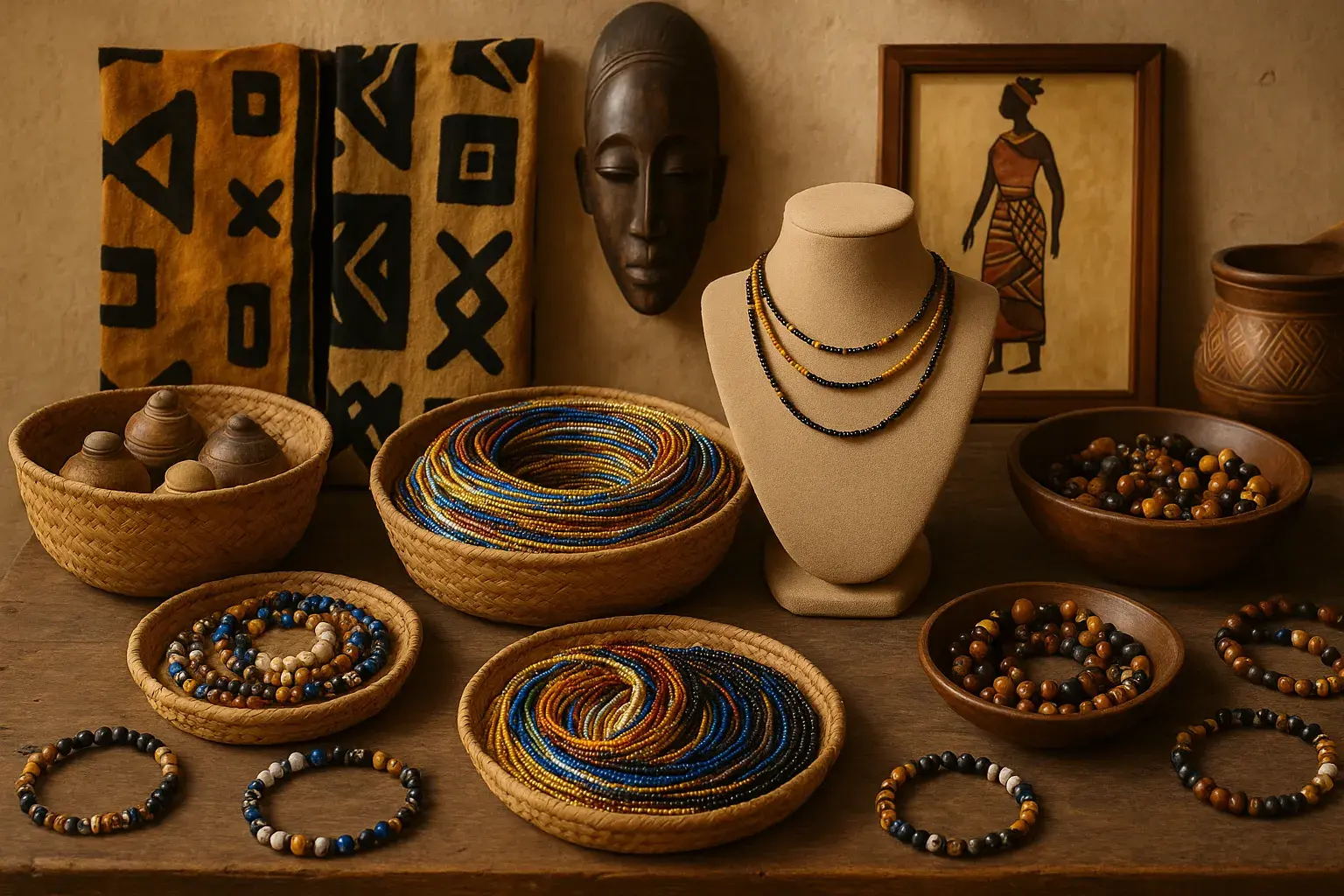
In the Krobo region of Ghana, artisans grind glass into powder, layer it into clay molds, and fire it into beads, often using recycled glass that gives each one small variations no machine could fake. The result has a depth and a slight irregularity that mass produced plastic simply cannot match. Hold a handmade Ghanaian glass bead up to the light and a cheap acrylic copy beside it, and you will never confuse the two again.
Color carries meaning too, though it is worth being honest that the meanings shift between cultures and sellers rather than following one fixed code. Gold is often tied to wealth and good fortune, green to growth and fertility, blue to calm and loyalty, red to confidence and passion, white to purity. Treat these as a vocabulary to choose from rather than a rulebook, and pick the colors that mean something to you.
How the beads found their way to the UK
For a long time, if you were in Britain and wanted real waist beads, you relied on a trip home, a relative's suitcase, or a stall at a cultural event.
That has changed. Waist beads have ridden the wave of renewed pride in African heritage, the body positivity movement, and a wider hunger for jewelry with a story behind it. Today there is a real UK audience for them, in the diaspora and well beyond it. The catch is that the online market has filled up fast, and a great deal of what is sold as waist beads is plastic strung in a factory with none of the craft or the meaning. The story is the easy thing to lose.
Which brings the whole thing back to a single decision: where you buy.
Buying waist beads online in the UK, the right way
If you want a strand that carries the real tradition rather than a hollow imitation, a few things tell you almost everything before you add to basket.
Material first. Look for handmade glass beads, ideally African made, with the small irregularities that prove a person made them. Vague listings that will not say what the beads are made of are telling you something by staying quiet.
Tie on or clasp. Traditional strands are tied on with cotton thread, sit permanently, and work as that gentle body measure. Clasp and elastic versions are removable and easier for everyday wear. Neither is better. Decide which fits your life and check which one you are buying.
Sizing. Real sellers explain how to measure, usually around the waist or the hips depending on where you want the beads to sit, and offer custom lengths. A one size strand with no guidance is a gamble.
The story. The best listings tell you where the beads come from, who made them, and what they mean. That artisan context is the clearest sign you are dealing with a seller who respects the craft rather than just shifting stock.
UK delivery you can trust. Clear shipping, clear timing, and a seller you can actually reach.
Get those right and the beads you tie on will mean something. Get them wrong and you have bought a costume prop.
A curated home for the real thing
This is where Sokofa fits the moment: a curated marketplace connecting shoppers to independent makers of African fashion, art, beauty, and cultural products. Rather than wading through endless plastic copies, you can browse beads from sellers who can name the maker and the origin, and shop the tradition from people who have the right to sell it.
Begin here:
Take your time. Read the vendor details. Choose the strand whose colors and story feel like yours.
Frequently asked questions
What are waist beads actually for? Traditionally they mark womanhood, celebrate the body, and pass between generations as heirlooms. Many women also use a tied on strand as a gentle, number free way to notice changes in their body. Today they are worn for all of that, and simply for the pleasure of wearing something beautiful and personal.
How do I know what size waist beads to buy? Measure around the part of your body where you want the beads to sit, the natural waist for a higher fit or the hips for a lower one, and follow the seller's sizing guide. Trustworthy sellers explain this clearly and often offer custom lengths.
What is the difference between tie on and clasp waist beads? Tie on strands use cotton thread, stay on permanently, and act as a natural body measure since they tighten and loosen with your body. Clasp or elastic strands can be taken on and off easily, which suits people who prefer to remove them for sleep, sport, or swimming.
Are the bead colors meaningful? Often, yes, though the meanings vary by culture and by seller rather than following one fixed system. Choose colors for what they mean to you as much as for any tradition.
Can I shower, sleep, and exercise in them? Tie on strands are made to be lived in, including showering and sleeping, and glass beads handle water well. If you prefer to take them off for the gym or the pool, a clasp version makes that simple.
Ready to find yours?
Waist beads have always been a small secret worn against the skin, a thread that links a woman to her own body and to the women before her. Buy the real thing, from someone who can tell you where it came from, and you are not just adding an accessory. You are tying on a story. Browse the Sokofa beauty pages above, take your time, and choose the strand that feels like it was already waiting for you.