Before the heat comes, while the savannah is still grey with early light, women walk out to the trees.
The shea trees have stood there longer than anyone living can remember, scattered across the grassland and the edges of the farms. Through the night they have dropped their fruit, and the women move between them gathering what has fallen, the way their mothers did, and their mothers before that. Inside each fruit, under a layer of sweet pulp, sits a single nut. Inside that nut is the fat that will become the cream in the jar on your shelf. It will pass through many hands and many hours before it gets there.
That is the thing most of us never picture when we ask what shea butter is used for. The short answer is easy: dry skin, rough elbows, the ends of hair, chapped lips, the comfort of skin after too much sun. But the long answer starts under those trees, and it is worth knowing, because once you understand where shea comes from and why it works, you stop buying it like a random jar of cream and start choosing it like the small treasure it is.
A tree that refuses to be hurried
Shea butter comes from the nut of the shea tree, Vitellaria paradoxa, which grows wild across a wide band of African savannah stretching roughly from Senegal in the west towards Uganda in the east. This belt is the only place on earth the tree truly thrives, and the tree has its own ideas about time.
It resists being farmed. It grows where it pleases, in the wild and on family land, and it makes you wait. A young shea tree can take around fifteen to twenty years before it bears any fruit, and decades more to reach full yield. A mature one can live for centuries. So the trees being harvested this morning were standing long before the women harvesting them were born, spared and protected by earlier generations who knew they would never see the reward themselves. Nobody plants a shea tree for their own benefit. They leave it standing for their grandchildren.
That patience is the first ingredient in every jar, and no factory can manufacture it.
Why it is called women's gold
The journey from nut to butter is long, and across the shea belt it has almost always been women who make it.
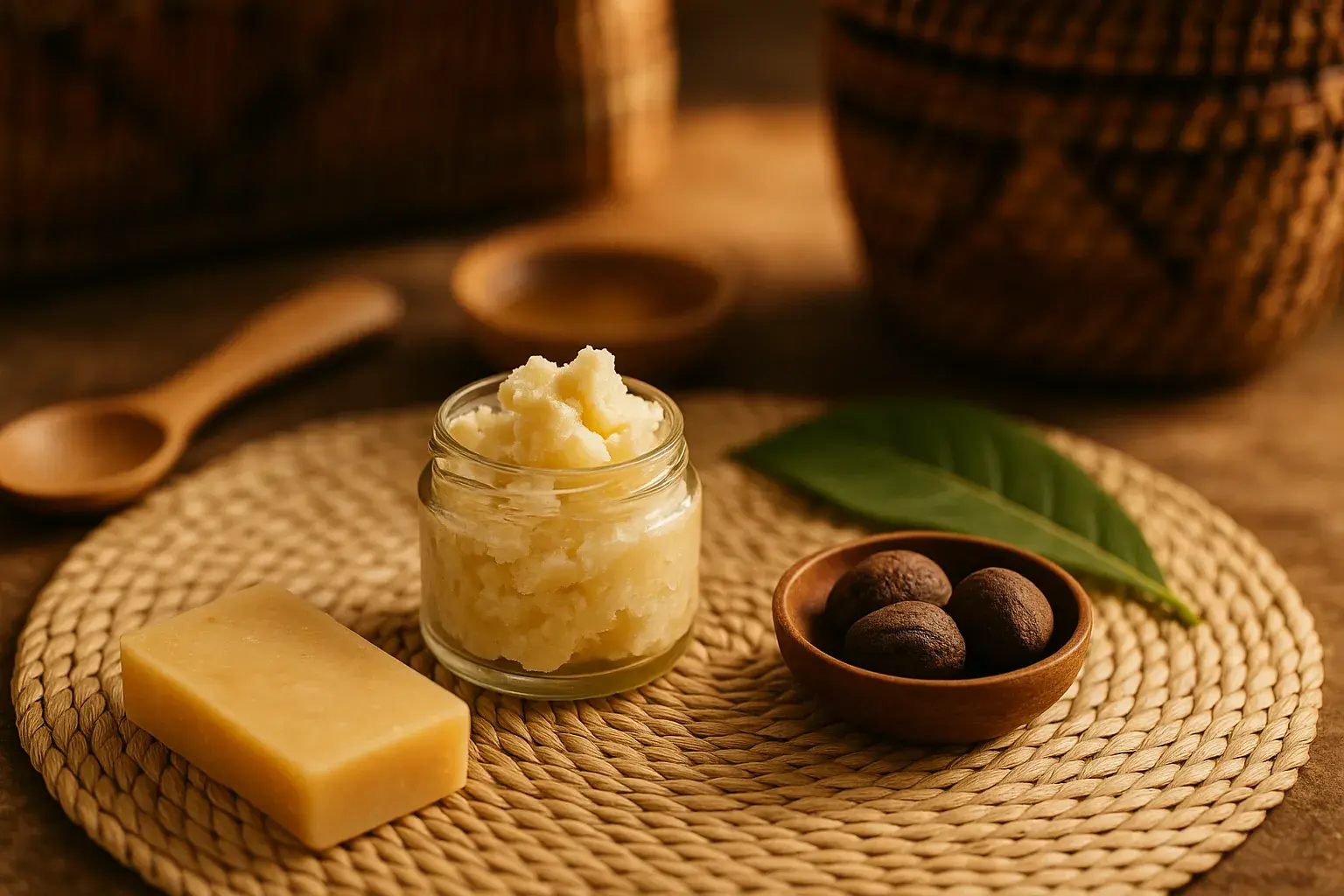
It is hard, skilled work. The fallen fruit is gathered and the nuts dried and cracked. The kernels are roasted and ground to a paste. Then comes the part that takes real strength: the paste is kneaded and whipped, over and over, often by hand, until the rich fats begin to separate and rise. It is boiled, skimmed, and left to cool, and only then does it set into the smooth cream you recognise.
For millions of rural women this is far more than tradition. It is income they earn and control, and standing in their communities, which is exactly why shea is so often called women's gold. In recent decades many have joined into cooperatives to process and sell it together, turning a centuries old craft into a livelihood of their own. When you buy real shea from a traceable source, part of what you pay travels back along that chain to the hands that did the work.
Keep that in mind, because it is the reason the next part matters so much.
So what is it used for, and why does it actually work?
Now the practical heart of it. Shea butter is, above all, an emollient, which simply means it softens skin and helps it hold on to moisture.
It works because of what is packed inside it. Shea is rich in fatty acids, mainly oleic and stearic, which sink into dry skin and form a gentle seal that slows water from escaping. It carries vitamins A and E, and natural plant compounds that many people find calming on irritated skin. That combination is why it has so many everyday jobs:
- Dry and rough skin. The classic use. It softens heels, elbows, knees, hands, and any patch that has gone rough and tight.
- Lips and cuticles. A tiny amount soothes chapped lips and dry nail beds.
- Hair and ends. Worked sparingly through dry ends or coarse, curly, and coily hair, it smooths and protects against breakage. Less is more, or it can feel greasy.
- After sun and harsh weather. It comforts skin stung by sun, wind, or the dry harmattan that cracks lips and roughens hands across West Africa.
- Scars, stretch marks, and very dry patches. Many people use it to keep these areas supple, though it moisturises rather than works miracles.
- Babies and new mothers. In much of West Africa it features in gentle baby massage and in the care a mother gives her own body after birth.
A quick word of honesty on the popular questions. Shea is rich, so on the face it suits dry and normal skin well, while very oily or breakout prone skin may find it heavy. It sits low on the scale for clogging pores, but skin is personal, so patch test a new jar before you trust it on your face. And while shea offers a whisper of natural sun resistance, it is nowhere near a sunscreen, so enjoy it after the sun, not instead of protection.
The questions people actually ask
A few more real ones, answered plainly, because they come up again and again.
Why has my shea gone grainy? It warmed and cooled unevenly somewhere along the way, which changes the texture but not the quality. It melts smooth again on the skin and is perfectly fine to use. If it bothers you, gently melting and re-setting it evens it out.
Does it expire? Raw shea keeps well, often a year or two, sometimes longer, if you store it somewhere cool and dry and away from direct sun. If it smells sharp or sour rather than nutty, it has turned.
Can you cook with it? In its homelands, yes. Shea is used in cooking and even in the chocolate industry as a substitute for cocoa butter. But shea sold for skincare is not necessarily food grade, so do not eat the jar from your bathroom shelf.
Raw or refined, and how to tell what you are holding
Not every jar on a shelf is the same thing, and the difference is easy to read once you know the signs.
Raw, unrefined shea keeps the character of the journey. It tends to be creamy beige or pale ivory, sometimes faintly yellow, with that natural nutty, slightly smoky scent, and it holds on to more of the vitamins and plant compounds that make shea soothing in the first place. Refined shea is processed further until it turns white and almost odourless. It looks cleaner and more uniform, but some of the good is stripped out with the smell. Neither is wrong. If you want shea closest to how it has been made for generations, choose raw.
The simplest test of all is in your palm. Real shea melts at body temperature, turning from solid to oil within seconds of contact with warm skin. If it stays stubbornly waxy, or feels suspiciously glossy and heavily perfumed, other things have been added.
How to buy the real thing
When you compare jars online, the label and the seller tell you almost everything.
Read the ingredients first. You want 100 percent shea butter, or a short, honest formula where you recognise every item, the kind you find in a focused African beauty collection or a dedicated skincare range. Be wary of vague "butter blend" labels when it is pure shea you are after, since fillers dilute the very thing you came for. Then look past the formula to the source. Trustworthy sellers tell you the region, the processing, and ideally the name of the producer or cooperative behind the butter. That openness is the clearest sign of the real thing.
One practical tip to finish. For general body use, a firmer raw butter is usually all you need. For hair or very dry skin, a whipped blend spreads more easily and absorbs faster. And wherever you are, the UK, USA, Canada, Europe, or Australia, worldwide shipping means you can buy from trusted African makers without gambling on quality.
Find your jar from makers you can trust
This is where a curated marketplace earns its keep. Instead of guessing at a wall of near identical jars, you can buy from vendors who can speak to the sourcing and the people behind the butter.
Sokofa connects shoppers to independent makers of African beauty and skincare, with transparent product detail that lets you choose with confidence. A good place to begin is the beauty and wellness collection and the latest new arrivals, where you can compare textures, blends, and sourcing notes and find the jar that suits your routine, your climate, and your skin.
Frequently asked questions
What is shea butter used for on skin?
Softening dry skin, sealing in moisture, and soothing rough patches like heels, elbows, and hands, as well as caring for lips, cuticles, and skin after sun or wind.
Is shea butter good for the face?
It suits dry and normal skin well and sits low on the pore clogging scale, but it is rich, so oily or breakout prone skin may find it heavy. Patch test before using it on your face.
Can I use shea butter on my hair?
Yes, sparingly, on dry ends or coarse, curly, and coily hair to smooth and protect it. Use a little, since too much feels greasy.
Raw or refined, which is better?
Raw keeps more of shea's natural vitamins and scent, while refined is whiter and odourless but stripped of some benefits. For shea closest to tradition, choose raw.
How do I know if shea butter is authentic?
Look for a creamy beige colour, a natural nutty smell, a melt at body temperature, a clear ingredient list, and a seller who names the region or cooperative. Real shea is not heavily perfumed or unnaturally glossy unless other ingredients were added on purpose.
How should I store it, and does it expire?
Keep it cool, dry, and out of direct sun, and it commonly lasts a year or two. A sharp or sour smell means it has turned.
Does shea butter ship worldwide?
Yes, through global marketplaces like Sokofa, with honest product detail so you know what you are buying from wherever you are.
The simple thing with a long story
The best shea butter feels almost too simple the moment it meets your skin. The story behind it never is. A wild tree that outlives the people who tend it, a craft carried by generations of women, real knowledge about why it works and how to spot the genuine article: all of that is folded quietly into a single jar.
When you are ready to find yours, start with makers who can tell you where it came from, then choose the texture that suits your skin. You will be holding far more than moisture.