
Picture a woman named Claire, last autumn, standing in the middle of a homeware shop on a busy British high street, holding a canvas print of an African woman balancing a clay pot on her head. It was £29.99. The colours were warm, the frame was tidy, and it would have looked perfectly fine above her sofa.
But something nagged at her. She turned the canvas over. On the back was a barcode, a SKU number, and three small words: Made in China.
The image was African. The object was not. No artist had ever touched it. No brush had ever crossed that canvas. Somewhere, a printer had fired thousands of identical copies onto fabric, and one of them had ended up in her hands, wearing the face of a continent it had never met.
Claire put it back. And the question she asked herself in that moment is the same one thousands of people across the UK are quietly asking right now: is it better to buy original African art or prints?
It is a fair question, and the honest answer is more interesting than you might expect. So let us walk through it properly, the way a collector would.
What you are actually buying when you buy original African art
When you buy an original African painting, you are not buying an image. You are buying an event. A specific person, in a specific studio, on a specific day, made a series of decisions that can never be repeated.
Take Seeker, an original reduction linocut and acrylic on canvas by the Nigerian artist Tosin Oyeniyi. The reduction linocut process is brutal in its honesty. The artist carves each colour layer from a single block, destroying the block a little more with every pass. When the final layer is printed, the block is gone. The work literally cannot be made again. Not by a factory. Not even by the artist himself.
That is what "original" means in its purest form. The work is the only one of its kind on earth.
Or consider Anxiety Cometh (Not), a large oil painting by Muktar Yusuf. It is four feet by three feet of raw, layered oil paint exploring what anxiety does to a person and what hope does to anxiety. Stand in front of an oil painting like that and you can see the ridges where the brush hesitated, the places where the paint sits thick, the texture that no camera and no printer can reproduce. A print of that painting would show you what it looks like. Only the original can show you what it feels like.
There is also a quieter truth here. When you buy an original from a living African artist, money flows directly into a real studio in Lagos, Abuja, or Enugu. You are not just decorating a wall. You are funding the next canvas.
So are prints the villain of this story?
No. And this is where most articles on this subject get lazy.
There are two completely different things that people call "prints," and confusing them is how buyers get burned.
The first kind is the mass-produced print. This is the £29.99 canvas Claire put back on the shelf. It is produced in enormous volumes, usually offshore, usually with no named artist, no edition number, and no connection to Africa beyond the imagery. It is wallpaper in a frame. There is nothing immoral about owning one, but you should know that nothing about it is African except the picture.
The second kind is the artist-authorised print. This is a different creature entirely. Here, a real African artist creates an original work, then releases a limited number of high-quality reproductions, priced so that people who love the work but cannot stretch to the original can still own a legitimate piece of it. The artist profits. The work is credited. The edition is controlled.
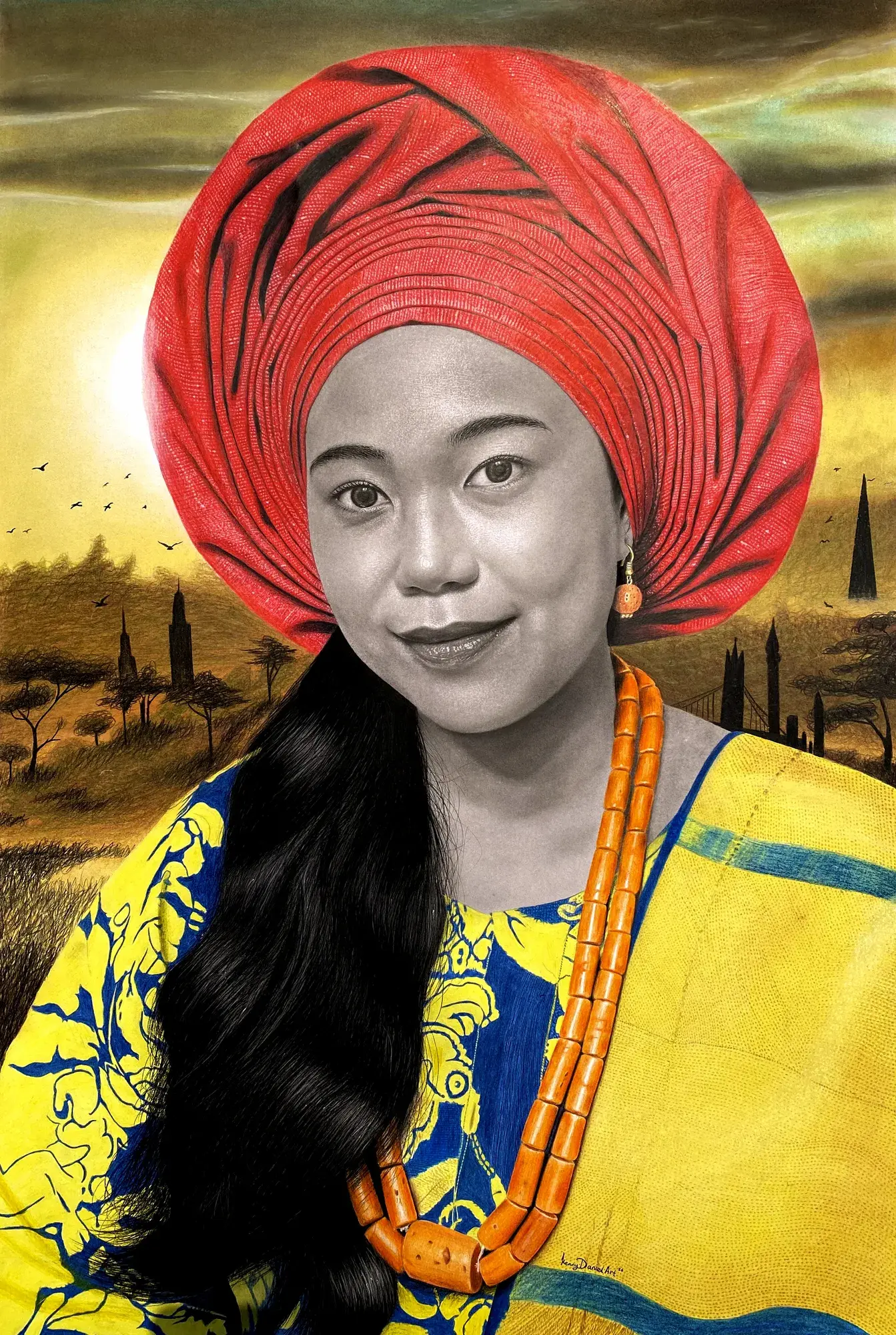
You can see this model working honestly on Sokofa. The painting A Love Story, a contemporary African art print is openly labelled as a print, sold by the artist's own studio, with the artist's name attached. Compare that to the high street canvas with the barcode. Both are prints. Only one of them is honest about what it is, and only one of them puts money in an African artist's pocket.
So the real divide is not original versus print. It is authentic versus anonymous.
How do I tell real African art from a reproduction?
This is the question we get asked most, so here is the checklist a seasoned buyer runs through. None of it requires expertise. All of it requires thirty seconds of attention.
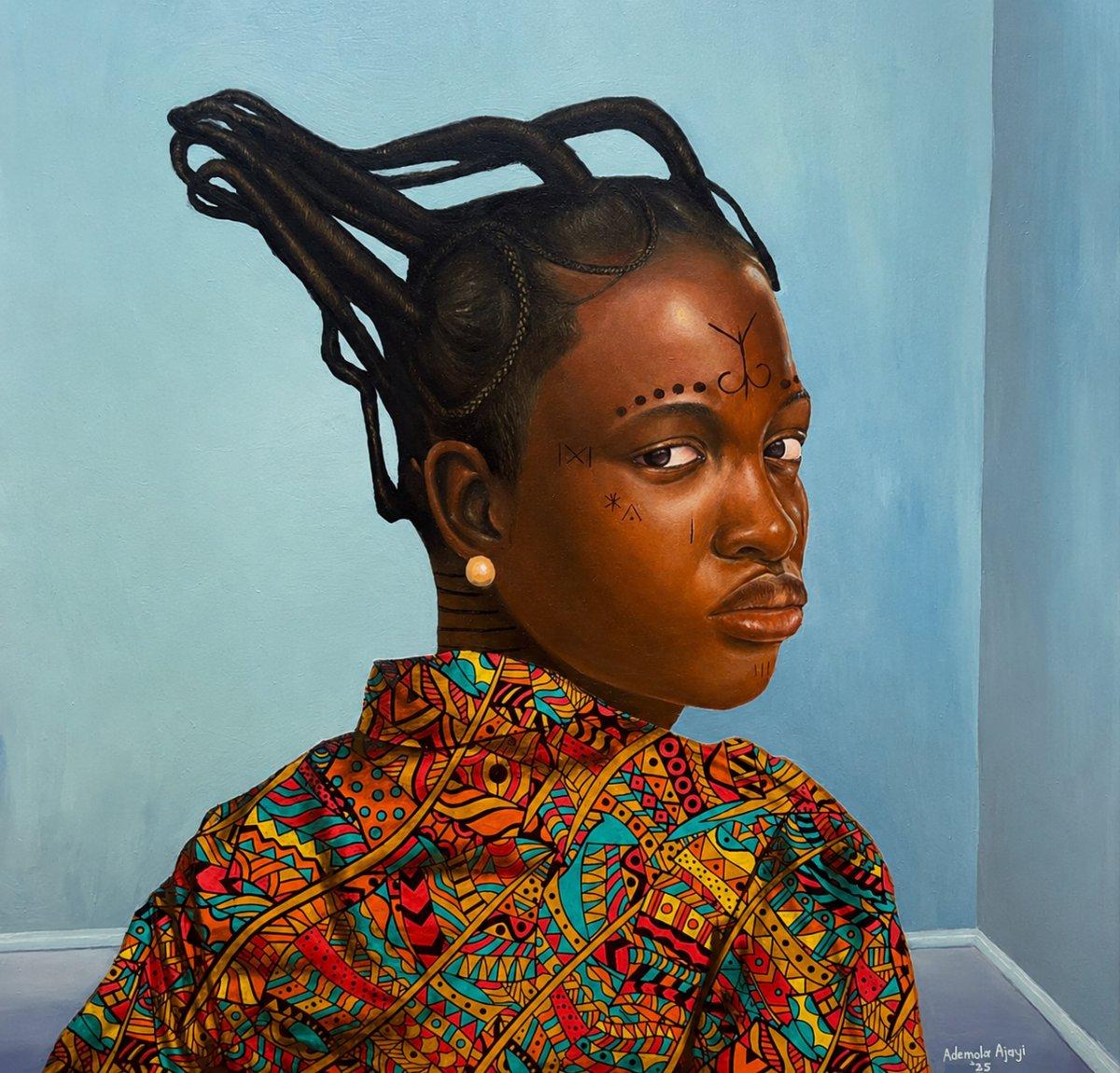
Ask who made it. Every authentic piece has a name attached. An artist, a studio, a workshop, a cooperative. On a genuine listing you will see the artist named and usually their city too. Spread Your Wings, a large original oil painting, is credited to Oludare Samson of Lagos, with the medium, the size, and the year. A mass-produced piece is credited to nobody, because nobody made it. A machine did.
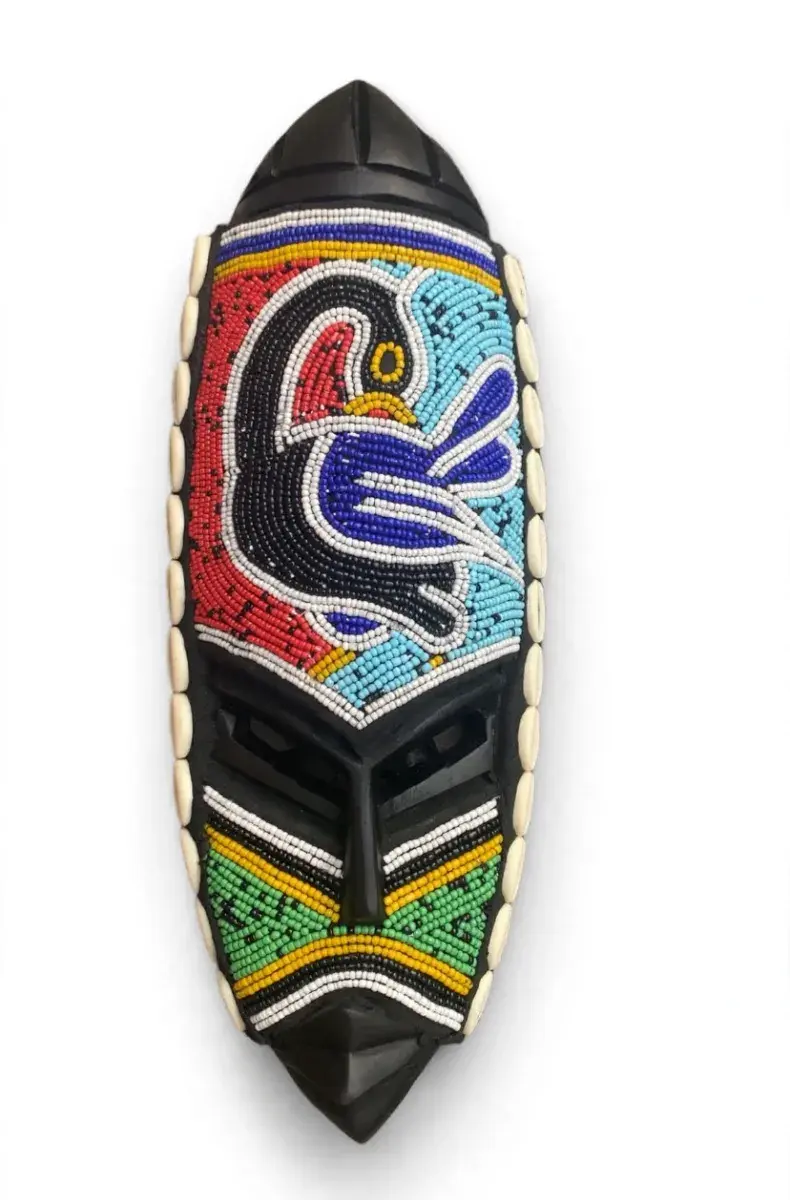
Look at the surface, not the image. Originals have topography. Oil and acrylic sit on the canvas in ridges and layers. Ink drawings show the pressure of the hand. Beadwork, like the intricately crafted Beaded Lady, has thousands of individually placed beads you could run a finger across. Reproductions are perfectly, suspiciously flat. If you are buying online and cannot touch the work, zoom into the photos and look for texture, or ask the seller for a close-up. A real seller will be delighted you asked.
Check the price against reality. A genuine original painting took a trained artist days or weeks. If a "hand-painted original" costs £25, somebody in that chain is lying or somebody is being exploited. Real original African paintings on Sokofa range from around £150 for works on paper to £1,750 for major canvases like Silent Gambit by The Creative Mason. Honest prints cost less, and say so.
Demand the word "print" where it applies. Reputable sellers label reproductions clearly, right in the title. If a listing is vague about whether the work is original, treat the vagueness itself as your answer.
Buy from places that verify their sellers. This is your strongest protection. On a marketplace where every seller is identified and every listing is reviewed before it goes live, part of the checking has already been done for you. That is one of the reasons Sokofa exists.
The case for buying the original
If you can afford the original, buy the original. Here is why collectors are so consistent on this point.
Originals hold meaning in a way reproductions cannot. The Cinderella series by Muktar Yusuf tells the story of a girl's journey from innocence to empowerment across three oil canvases. Whoever owns Cinderella II owns chapter two of that story. Nobody else on the planet does. Twenty years from now, that painting will still be the only one of itself, and the artist who made it may well be far better known than he is today.
Originals also age differently in your own mind. A mass print becomes invisible within months. You stop seeing it the way you stop hearing a ticking clock. An original keeps revealing itself, because there is depth in the surface for your eye to keep finding. People who own originals describe noticing new details years after the purchase.
And originals carry their story with them. When guests ask about the painting above your fireplace, "I found this artist in Lagos through an African marketplace, and this is the only one in existence" is a very different sentence from "it was on sale at the garden centre."
The case for buying an honest print
Now the other side, told straight.
If your budget is £30 to £150, an honest artist print is a far better purchase than a cheap "original" of dubious origin. You get legitimate African art, a named artist gets paid, and you can upgrade to originals later as your budget grows. Works like the Elegant Dames in Fashion print, a contemporary Nigerian piece sit exactly in this sweet spot. They are clearly labelled, fairly priced, and they fund a working artist.
Prints are also forgiving. Renting a flat and unsure where you will live next year? A print travels easily and costs little to reframe. Filling a hallway, a stairwell, a guest room? Prints let you build a gallery wall without remortgaging the house.
Many of the best collections in Britain started with one honest print and grew from there.
A simple rule to carry with you
Strip everything above down to one sentence and it is this: buy the most authentic thing your budget allows, from a source that can tell you exactly who made it.
That means a £40 artist print beats a £40 anonymous "original." A verified £300 original beats an unverified £300 original. And anything, at any price, beats the barcode canvas from the high street, because that object gives nothing back to the continent whose face it borrows.
Imagine that Claire, the woman from the beginning of this story, eventually bought an original ink drawing from a Nigerian artist for less than she expected to pay. It hangs in her hallway now. Every morning she passes a piece of work that exists nowhere else in the world, made by a person whose name she knows, in a city she now wants to visit.
That is the difference. Not between art and prints. Between something made and something manufactured.
Ready to find yours? Browse the full collection of original African paintings and artworks on Sokofa, where every listing tells you exactly what you are buying, and every purchase reaches a real studio in Africa.