Hannah found the necklace at the back of a market stall in Camden, three rows of red and white beads with a small brass charm, and asked the trader what it meant. He shrugged and said it was "tribal." That was the whole answer. She bought it anyway, wore it twice, and then put it in a drawer, slightly embarrassed that she had spent twenty pounds on something she could not explain to a single friend who asked about it.
That moment happens constantly in Britain, where African beaded jewellery has become genuinely fashionable over the last decade, turning up on high street rails and in independent boutiques from Brighton to Glasgow, almost always stripped of any context. Maasai beadwork and Tuareg silver are two of the most recognisable and most frequently flattened traditions in this trade. Both are centuries old, both carry real meaning encoded in colour, pattern and metal, and both deserve a slightly longer answer than "tribal" before they end up on someone's wrist.
This is that longer answer. We will look at where Maasai beaded jewellery comes from and what its colours actually communicate, what makes Tuareg silver distinct from other West and North African metalwork, how to buy either tradition responsibly when shopping from the UK, and how to wear pieces inspired by these traditions in a way that feels respectful rather than costume like.
What is Maasai beaded jewellery, and where does it come from
The Maasai are a pastoralist people living across southern Kenya and northern Tanzania, and beadwork sits at the centre of Maasai social life in a way that has no direct equivalent in British culture. Beaded collars, bracelets and headpieces mark age, marital status, and life stage. A young unmarried woman wears different beadwork from a newly married one. Warriors, known as morans, wear specific pieces tied to their stage of life. None of this is decorative in the way a British person might use that word. It is closer to a uniform that communicates social information at a glance to anyone who can read it.
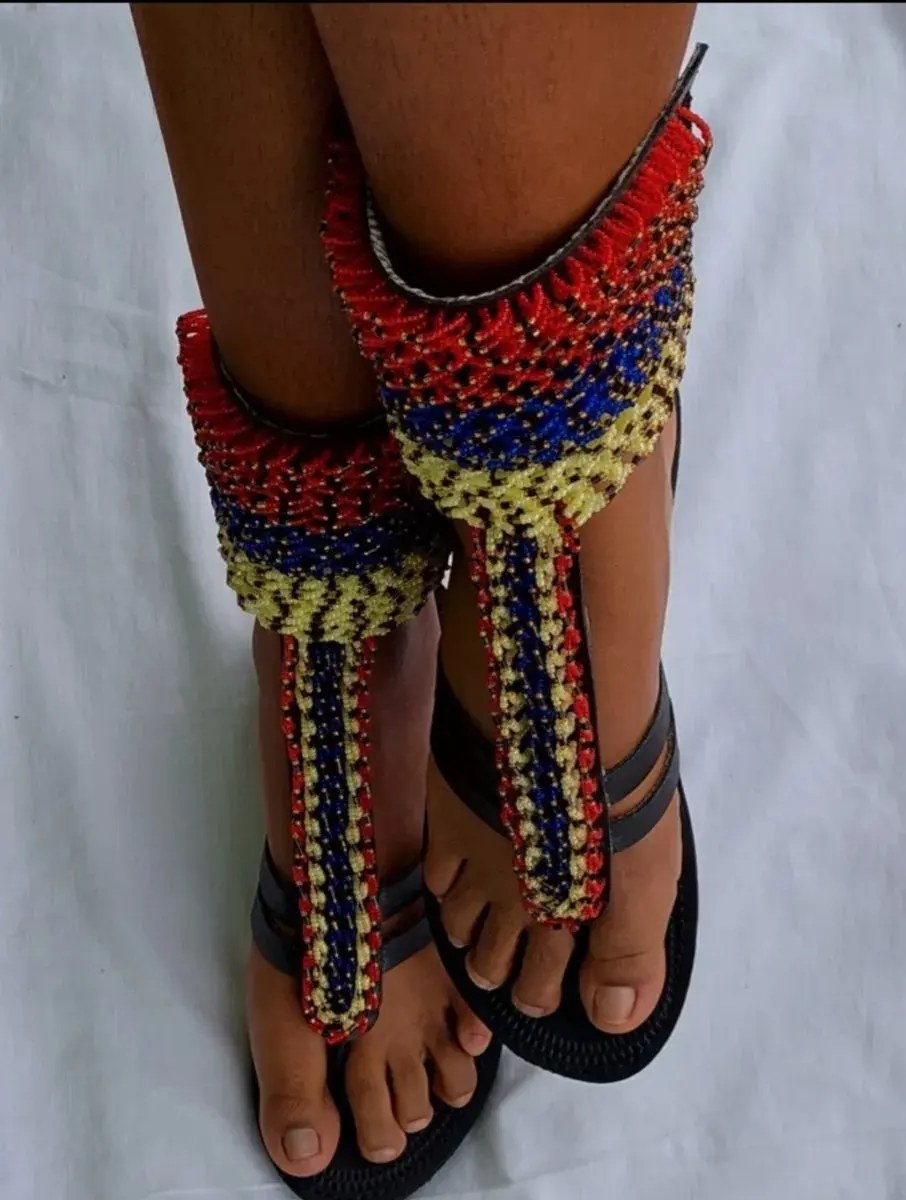
The materials have shifted over time. Before glass beads arrived through trade routes in the nineteenth century, Maasai beadwork used materials like clay, bone, wood, shell, and metal. Glass beads, once they became widely available, were adopted quickly because of the range of colour they offered, and that palette is what most people now associate with Maasai jewellery: tightly packed discs and collars in bold, saturated colour combinations, often built around a flat circular or fan shaped collar design that sits close to the neck.
The meaning of maasai beadwork colours
Colour in Maasai beadwork is not random and it is not purely aesthetic, though accounts of exact meaning vary between communities and have shifted over generations, so treat any single explanation as a starting point rather than a fixed rulebook. Red is the colour most associated with Maasai identity and is generally tied to bravery, strength, and unity, echoing the red ochre traditionally worn on the body. White is commonly associated with purity, health, and peace, and is often used as a background colour that other colours sit against. Blue is linked to the sky and to water, both of which carry obvious life sustaining importance in a pastoralist, often arid, landscape. Green represents land, grass, and production, again reflecting the centrality of grazing land to Maasai life. Black can represent the hardship the community endures and unity through that shared experience. Orange and yellow are tied to hospitality, generosity, and warmth.
What matters for a UK buyer is not memorising this as a checklist, but understanding that a piece of genuine Maasai beadwork is communicating something specific to people who can read it, even if you cannot. That is worth knowing before you wear it, and it is also exactly why mass produced "Maasai style" jewellery made in a factory with no connection to a Maasai maker tends to feel hollow next to the real thing. The pattern is copied. The meaning is not.
What is Tuareg silver jewellery, and what makes it distinct
Move from East Africa to the Sahara and you find an entirely different tradition with an entirely different relationship to metal. The Tuareg are a nomadic Berber people spread across Niger, Mali, Algeria, Libya, and Burkina Faso, and their silverwork is one of the most distinctive metalworking traditions on the continent. Unlike many West African traditions that favour gold, Tuareg craftsmen have historically worked almost exclusively in silver, a preference rooted partly in Islamic tradition and partly in trade history across the Sahara.
The most recognisable Tuareg form is the cross, sometimes called the Cross of Agadez after the Nigerien city associated with one of its most famous variants, though there are dozens of regional cross designs across Tuareg territory, each tied to a specific place and, traditionally, given by a father to a son as a marker of identity and protection. Tuareg silverwork also includes large, geometrically engraved rings, cuffs, and pendants, often featuring blackened engraving against polished silver, a technique that creates striking contrast without using any other material.
The craftsmanship itself is notable for being entirely hand forged, using techniques passed down within specific families of smiths, called inadan, who have historically occupied a distinct social position within Tuareg society as both craftspeople and keepers of certain oral traditions. Genuine Tuareg silver carries the slight irregularity of hand forging: tool marks, minor asymmetries, a weight and density that cast or machine made imitations rarely replicate convincingly.
African beaded jewellery online UK: buying responsibly
If you are searching for african beaded jewellery online UK, the honest starting point is to separate three categories that often get blurred together in online listings. The first is genuine pieces made within a specific tradition by a maker from that community. The second is jewellery inspired by or in conversation with a tradition like Maasai beadwork, made by African artisans more broadly using similar techniques and materials, such as cowrie shells, glass beads, and brass. The third is mass produced costume jewellery with no real connection to any tradition, often manufactured outside Africa entirely and sold using the language of African culture purely for marketing.
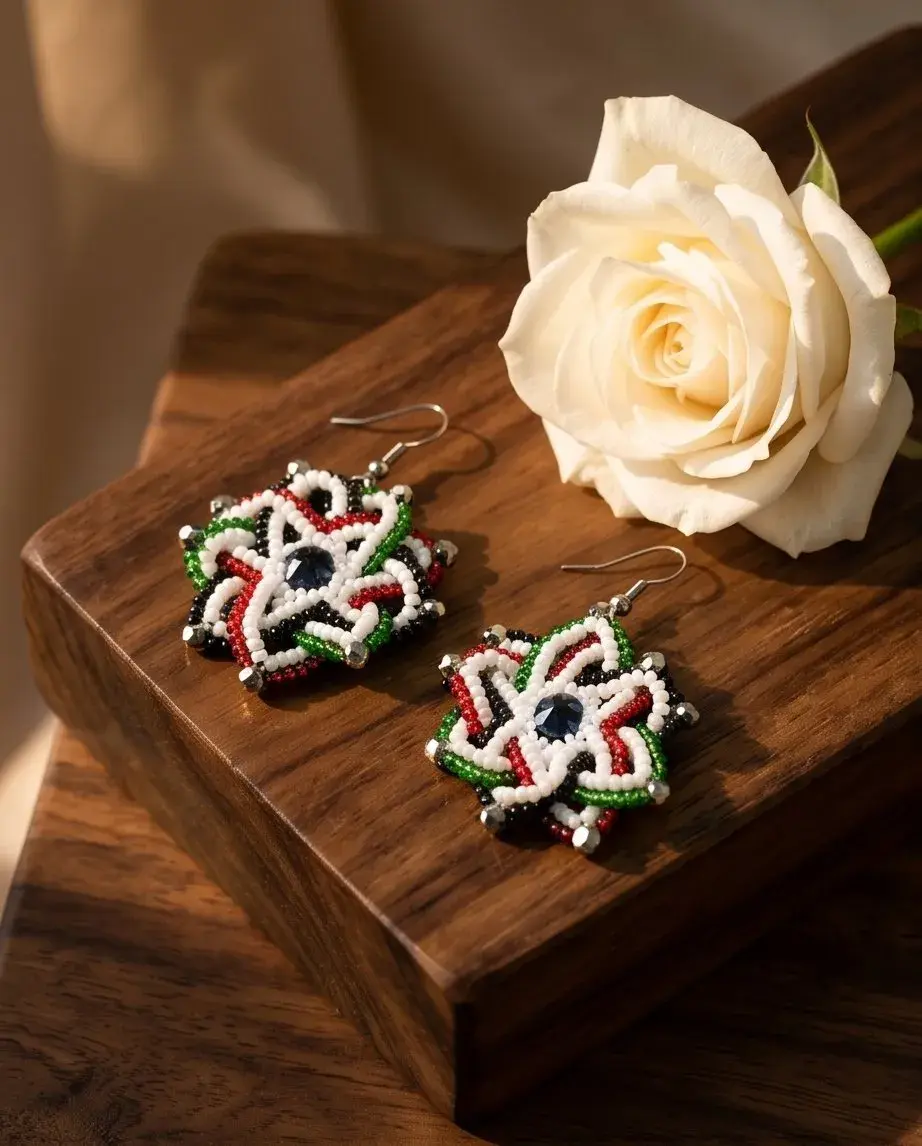
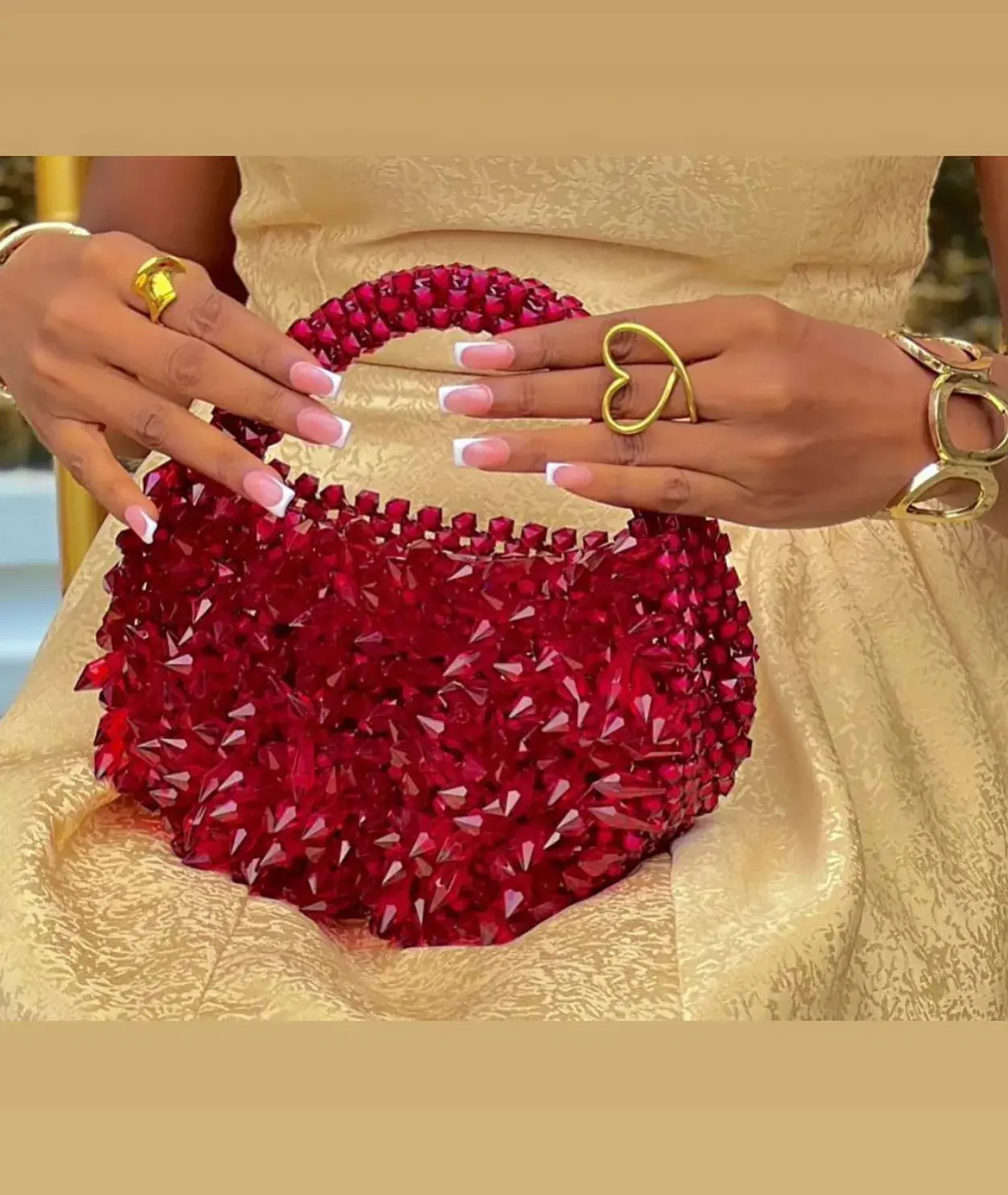
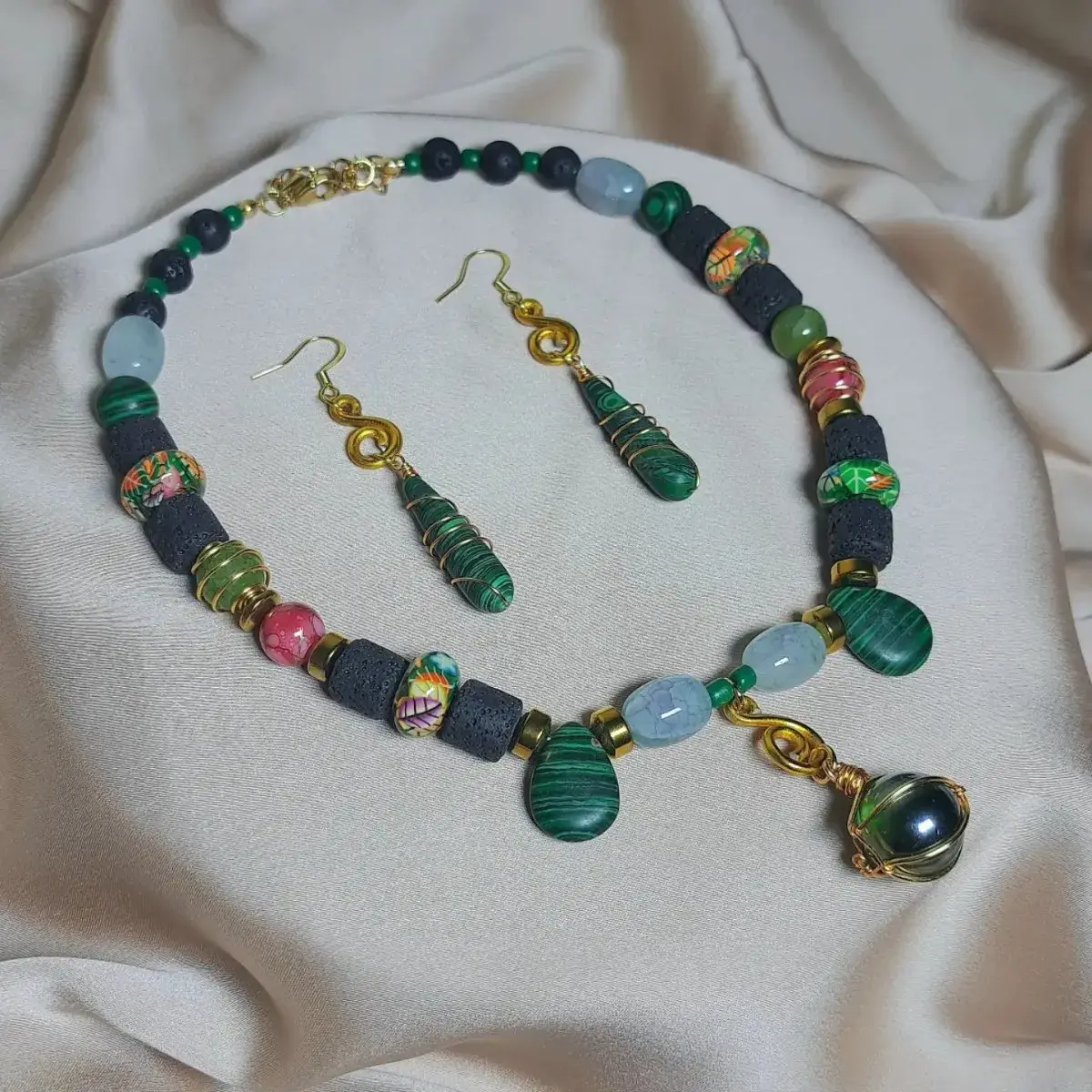
There is nothing wrong with buying from the second category. Beadwork is a continent wide craft, not the exclusive property of any single community, and an artisan working in Lagos or Abuja producing beautiful, well made beaded pieces is doing legitimate, skilled work even when the design is not a literal Maasai collar. The Double Strand Cowries Necklace and the Adire Themed Dangling Earrings available on Sokofa fall into this honest middle category: handmade by verified artisans, rooted in genuinely African materials and aesthetics, sold without pretending to be something more specific than they are.
What to avoid is the third category, and the simplest way to avoid it is to buy from a marketplace that names the actual maker and their location, rather than a generic listing with stock photography and no provenance at all. If a seller cannot tell you who made a piece or where, that is information worth asking for before you buy. Browsing the jewellery category on Sokofa shows exactly this: each piece is listed with the artisan's name and city.
How to wear maasai jewellery and beaded pieces with confidence
Wearing African beaded jewellery well in the UK is less about following strict rules and more about wearing it the way you would wear any piece of jewellery with a story: with a bit of knowledge and without anxiety. A beaded collar or a substantial cowrie necklace works best as the focal point of an outfit rather than one accessory among many, since the scale and colour are designed to draw the eye. Keep the rest of the look simple. A plain top or dress lets a statement piece do the work it was made to do.
Layering works particularly well with smaller pieces. Dangling earrings like the adire themed pair work naturally with an updo or pulled back hair, since the point of a dangling design is movement and visibility. If you are new to wearing beaded jewellery and feel slightly self conscious, start with a single piece rather than head to toe styling, and let people ask you about it. That conversation, where you can say a little about who made it and where, is a far better outcome than the blank "tribal" answer Hannah got in Camden. If you want a sense of how beadwork crosses into other African art forms, pieces like Beaded Lady show the same craft translated onto canvas.
The deeper point
Jewellery that travels this far, from a workshop in Nairobi or a smith's forge in the Sahara to a wrist in the UK, has usually lost some of its context along the way. That is not a reason to avoid it. It is a reason to ask a few more questions before you buy, to seek out sellers who can answer them, and to wear what you choose with at least a little of the story intact. A piece bought with that small amount of curiosity tends to get worn for years rather than left in a drawer.
If you want to start building a collection of genuinely handmade pieces, browse the jewellery and accessories on Sokofa, where every item is sold directly by a named African artisan, or look at the gifts under fifty collection for a thoughtful, well made first piece.