
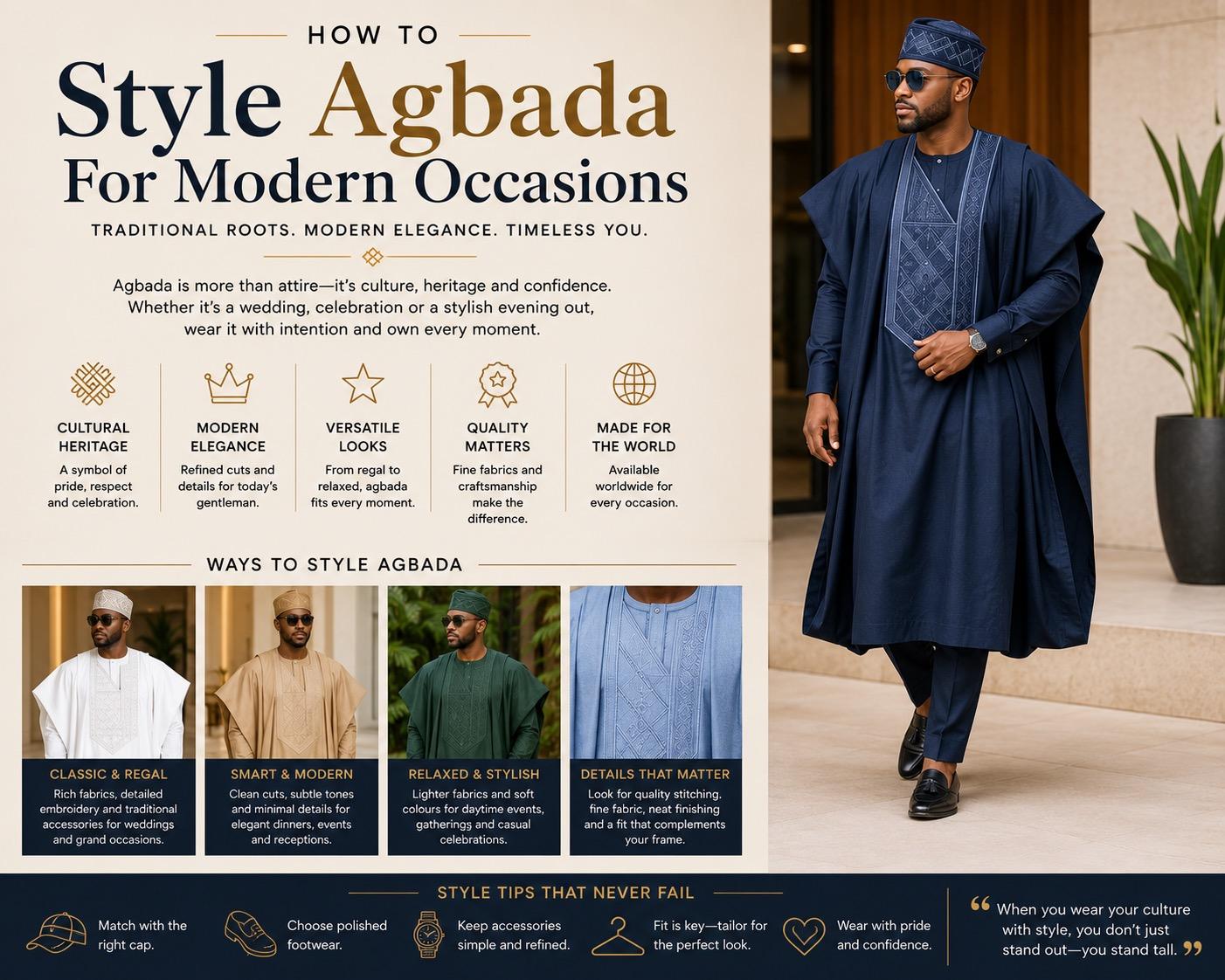
How To Style Agbada For Modern Occasions
How to style agbada for modern occasions starts with the cloth, the cut, and the setting. How to style agbada for modern occasions well means knowing when a flowing robe should feel regal, relaxed, or sharply contemporary.
You may see it at a wedding in Lagos, a naming ceremony in Accra, a gallery opening in London, or a milestone dinner in Toronto. The right agbada carries presence without trying too hard, and that balance is exactly why it still feels fresh today.
Agbada’s Place In West African Style
Agbada is a flowing outer robe worn across West Africa, especially among Yoruba and Hausa communities, usually layered over a buba and trousers. In many families, it signals celebration, respect, and a clear sense of occasion. You are not just putting on a garment, you are stepping into a dress code that has long marked important moments.
The beauty of agbada is how flexible it has become. Traditional versions may come in rich aso-oke, handwoven cotton, lace, or embroidered fabrics, while modern versions can lean lighter, cleaner, and easier to move in. That is why how to style agbada for modern occasions is less about changing the garment and more about refining the details around it.
What Makes It Modern Without Losing Its Roots
A modern agbada usually keeps the robe’s volume but trims the excess. Think precise embroidery, a slimmer shoulder line, a cleaner neckline, and a colour palette that works beyond a single ceremony. Deep navy, ivory, wine, sage, and charcoal often feel contemporary while still honouring the garment’s ceremonial weight.
You can also update the look through texture. A matte weave feels quietly elegant, while a subtle sheen in silk blend or brocade can give evening polish. If you are choosing between loud embellishment and restraint, restraint often reads more expensive and more current.
A well-made agbada should move beautifully when you walk, but it should also hold its shape when you stand still. That is the difference between clothes that merely fit the event and clothes that honour it.
Agbada Fabric Choices: Aso-Oke, Lace, And Embroidery
Fabric changes everything. A heavy agbada in richly woven aso-oke will feel ceremonial and rooted in tradition, while a lighter cotton or lace version works better for daytime weddings, receptions, and summer events. If you want a more fashion-forward finish, look for clean embroidery, tonal threadwork, and fabric that drapes rather than collapses.
How To Spot Quality Before You Buy
Check the weave first. Good aso-oke should feel structured and intentional, not flimsy or overly synthetic, and the pattern should stay consistent across the cloth. On embroidered pieces, examine the stitching on the front panel, sleeves, and edges, because uneven threadwork often shows rushed production.
Also look at the lining and finishing. A quality agbada has tidy seams, balanced proportions, and embroidery that sits flat rather than puckering. If you are buying online, close-up product photos and clear fabric descriptions matter just as much as the styling shot.
Signs Of Poor Construction
Poor agbada often reveals itself in the drape. If the robe hangs awkwardly, pulls at the shoulders, or looks stiff in the wrong places, the cut is probably off. You should also be cautious with fabric that looks shiny in a cheap way, because that can signal low-grade synthetic material instead of the richer hand-feel people expect.
Another warning sign is embroidery that looks printed from a distance. Real stitching has depth and texture, even when it is subtle. If the garment is advertised as ceremonial wear but the finishing looks flat, you may be looking at costume-level construction rather than a piece made for real occasions.
How To Style Agbada For Modern Occasions With Confidence
For weddings, keep the styling polished and intentional. Pair your agbada with a matching cap, tailored trousers, and leather shoes that are clean and understated. If the robe is richly patterned, let the rest of the outfit stay calm so the whole look feels balanced.
For a modern reception, art opening, birthday dinner, or cultural gala, you can soften the traditional formality. Choose a slimmer cut, a lighter fabric, and a colour that feels elegant under indoor lighting. This is where how to style agbada for modern occasions becomes a matter of proportion, not just tradition.
Accessories That Work
Keep your accessories purposeful. A simple wristwatch, polished loafers, and a well-chosen cap can do more than oversized jewellery or too many competing textures. If you want a more rooted look, add a beaded necklace or discreet cuff, but do not crowd the outfit.
Footwear matters more than many people realise. Clean loafers, classic derbies, or well-made slip-ons can elevate the entire look, while bulky shoes can interrupt the robe’s flow. The goal is ease, not overstatement.
When To Go Traditional, When To Go Contemporary
A traditional agbada suits weddings, naming ceremonies, funerals, chieftaincy events, and major religious gatherings. For these, richer fabrics and fuller silhouettes make sense because the garment is part of the ceremony itself.
For contemporary occasions, you can scale things back. Shorter embroidery, lighter cloth, and a more tailored buba or trouser shape can make agbada feel right at home in a modern setting. That is why how to style agbada for modern occasions works best when you think about context first and trend second.
Buying Authentic African Menswear Online Worldwide
If you are shopping from the UK, USA, Canada, Europe, or Australia, look for vendors who describe the fabric clearly, show real product images, and explain how each piece is made. That matters whether you are buying a full agbada set, a Yoruba-inspired ensemble, or other pieces in the wider African fashion collection. The most trustworthy listings usually tell you who made the garment, what it is cut from, and how it should fit.
Sokofa is useful here because you are not just browsing random listings, you are shopping a global African marketplace with culture-forward pieces across fashion, art, beauty, and gifts. If you want to compare new styles before they sell out, the latest African fashion new arrivals page is a practical place to start. For men’s occasionwear specifically, the African menswear collection helps you move straight to the cuts, fabrics, and finishing details that matter.
For international buyers, pay attention to sizing notes and tailoring flexibility. Agbada is forgiving in some areas because of its volume, but shoulder fit, sleeve length, and robe length still need care. If you are ordering for a wedding or event abroad, allow time for shipping, alterations, and accessories so the whole look lands exactly where you want it.
Frequently Asked Questions
How much does agbada cost?
Agbada prices vary widely depending on fabric, embroidery, and whether the piece is hand-finished. A simple ready-to-wear set may be more affordable, while handwoven aso-oke, detailed embroidery, or bespoke tailoring will usually cost more. If you are comparing options, look beyond the price tag and ask what craftsmanship is actually included.
How do I know if agbada is authentic?
Authentic agbada should be described with clear cultural and material details, not vague fashion language. Look for specific mentions of aso-oke, lace, cotton, embroidery, or tailoring origin, and avoid listings with generic stock photos and no construction details. Real artisan-made pieces usually show texture, structure, and honest product information.
Can I ship agbada worldwide?
Yes, many African fashion vendors ship internationally, including to the UK, USA, Canada, Europe, and Australia. Always check delivery timelines, packaging, and whether the seller provides accurate measurements, especially if you need the outfit for a wedding or formal event. International shipping is easiest when the product page is detailed and the vendor knows how to work with global buyers.
How do I care for agbada fabric?
Care depends on the material. Aso-oke and heavily embroidered pieces often need gentle handling, professional cleaning, or careful spot treatment, while lighter cotton versions may be easier to maintain. Store agbada in a cool, dry place, hang it carefully so it keeps its shape, and avoid rough folding that can crease the embroidery.
Ready For The Occasion
The strongest agbada looks never feel accidental, they feel chosen with care. When you know the fabric, understand the occasion, and recognise the workmanship, how to style agbada for modern occasions becomes much easier and much more rewarding.
If you are ready to find a piece that feels current, rooted, and made for real life beyond the event photo, start with Sokofa’s African fashion collection and move toward the cut that fits your next occasion.